

Guide to Foreign Ownership in UAE Property Market

Introduction

The United Arab Emirates has long been a magnet for global investors, and its real estate sector is one of the strongest pillars of its economy. With a thriving economy, world-class infrastructure, and a safe investment environment, the UAE offers lucrative opportunities for property buyers from around the world.

Among its seven emirates, Dubai stands out as a premier investment hub, attracting expatriates and international investors with its cosmopolitan lifestyle, tax-free advantages, and steady property value growth. The city’s ambitious developments, from luxury waterfront communities to futuristic skyscrapers, make it a sought-after destination for both living and investment.

However, for foreign buyers, understanding the laws governing property ownership is crucial. The UAE has specific regulations that determine where and how expatriates can own real estate. These laws are designed to protect investors, maintain market stability, and ensure smooth property transactions. Knowing these rules not only prevents legal complications but also helps investors make informed, profitable decisions in Dubai’s competitive real estate market.

  • In the UAE, foreigners are permitted to acquire real estate, though this is restricted to specific freehold or leasehold zones.
  • Dubai and Abu Dhabi provide the most accommodating regulations, permitting complete ownership in premier locations such as Palm Jumeirah and Saadiyat Island.
  • The property acquisition process involves several key steps: executing a Memorandum of Understanding (MoU), securing a No Objection Certificate (NOC), and completing the registration with the relevant land department.
  • Investors are eligible for UAE residence visas, with options starting at AED 750,000 for a two-year visa or AED 2 million for a ten-year Golden Visa.
  • To avoid common mistakes like unexpected fees, overpayment, and confusion about ownership types, it’s crucial to work with a licensed agent and meticulously review all contracts.

With its flourishing real estate market and favorable tax policies, the UAE is a top choice for foreign investors. This raises a crucial question: What are the actual rules for foreigners buying property in the UAE? Let’s explore the legal framework, covering everything from the regulations to strategies for sidestepping typical challenges.

Understanding Foreign Ownership Laws in the UAE

The first step is to grasp the fundamentals. In the UAE, each emirate, rather than the federal government, establishes property ownership laws. This means that the regulations differ based on whether you are purchasing a property in Dubai, Abu Dhabi, or Sharjah.

For example:

  • Dubai’s Law No. 7 of 2006 enables foreign nationals to own freehold property within specific zones.

  • Abu Dhabi has enacted significant changes in 2019 and 2021, increasing real estate ownership rights for foreign buyers.

  • Sharjah provides long-term leaseholds (up to 100 years) instead of full freehold ownership.

Current Legal Framework

In the UAE, property ownership laws are shaped by a combination of federal regulations and emirate-level legislation. Federal laws provide the broad legal foundation for property rights across the country, but each emirate has the authority to establish its own rules and regulations for real estate transactions. This means the property ownership framework in Dubai can differ from that in Abu Dhabi, Sharjah, or other emirates.

In Dubai, the cornerstone of foreign property ownership is Law No. 7 of 2006 concerning Real Property Registration. Under this law, UAE nationals and GCC citizens can own property anywhere in Dubai, while non-GCC expatriates are permitted to own real estate on a freehold or leasehold basis, but only in areas specifically designated for foreign ownership by the Ruler of Dubai.

  • Freehold Ownership gives the buyer complete and indefinite ownership of both the property and the land it sits on. Owners can sell, lease, or pass on the property as they wish, and they receive a title deed from the Dubai Land Department.

  • Leasehold Ownership allows the buyer to lease the property for a fixed term—typically between 10 and 99 years—without owning the land itself. At the end of the lease term, the ownership reverts back to the freeholder unless renewed.

Consequently, although there isn’t a single universal regulation, the direction is obvious: a growing number of emirates are welcoming foreign investors.

Guide for Foreigners: How to Buy Property in the UAE

Can foreigners buy property in the UAE? The answer is a clear yes—but with one important condition: you can only do so in specific, designated zones. The UAE has created special freehold areas where foreigners, whether they live in the country or not, are legally allowed to purchase real estate.

When a foreigner buys a property, they generally have two main choices:

  • Freehold: This means you own the property and the land it’s built on, forever.

  • Leasehold: This is a long-term lease that can last for up to 99 years, but you don’t own the land itself.

Some emirates even have additional options like:

  • Usufruct: This is the right to use a property for up to 99 years, but you can’t make any major changes to it.

  • Musataha: This allows you to build or develop on someone else’s land, usually for a period of 50 years with the option to renew.

Keep in mind that how these options work can vary from one emirate to another, so where you want to buy is a very big deal.”

Dubai Property Buying Rules for Foreign Investors

Dubai led the way in the region by allowing foreign ownership of real estate and remains the most accommodating market for global investors.

Freehold Areas in Dubai

Foreigners can own 100% of property in areas like:

  • Palm Jumeirah
  • Downtown Dubai
  • Business Bay
  • Dubai Marina
  • Jumeirah Village Circle (JVC)

Full ownership rights, without the need for a local partner, are granted in these zones, which are governed by the Dubai Land Department (DLD).

Foreign buyers can choose from more than 40 freehold zones in Dubai, featuring everything from luxurious beachfront properties to family-friendly communities.

What’s Available to Buy

  • Apartments
  • Villas
  • Townhouses
  • Commercial spaces
  • Land (in select freehold zones)

Complete Guide to Dubai’s Legal Process: Step-by-Step

  1. Select a licensed real estate agent who is registered with the Real Estate Regulatory Agency (RERA).
  2. Formalize the agreement by signing a Memorandum of Understanding (MoU) that clearly outlines the sale terms.
  3. Secure a No Objection Certificate (NOC) from the property’s developer. This confirms there are no outstanding issues or dues.
  4. Complete the transaction by officially registering it with the Dubai Land Department (DLD).
  5. Settle the necessary fees, which include the 4% DLD transfer fee, a 580 AED administrative fee, and other potential costs like trustee charges.

Property Purchase Regulations for Foreigners in Abu Dhabi

Abu Dhabi has recently streamlined its property ownership regulations, opening up new opportunities for foreign investors.

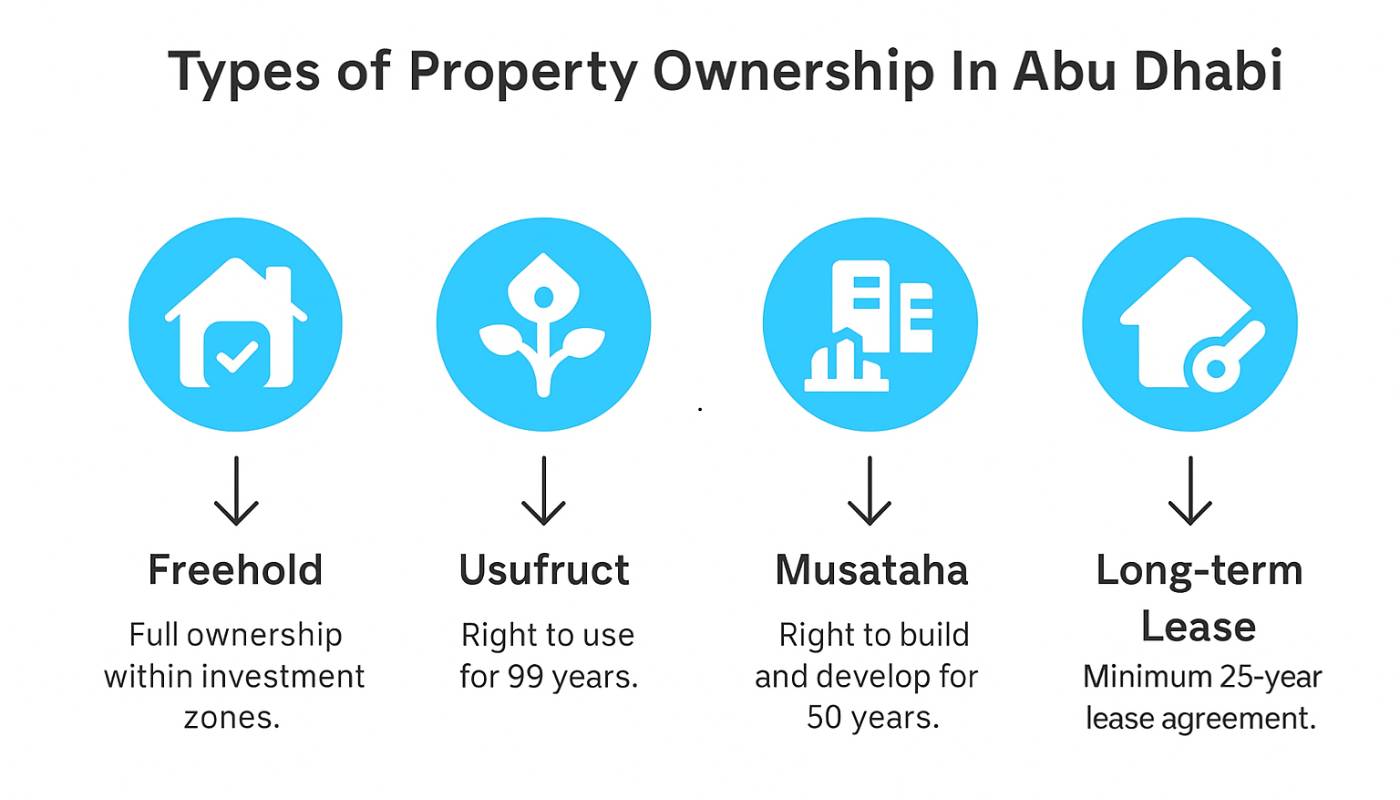
Types of Property Ownership in Abu Dhabi

  • Freehold in investment zones
  • Usufruct: 99 years, with rights to use but not alter
  • Musataha: 50 years, with rights to build and develop
  • Long-term lease: 25 years minimum

Where Foreign Investors Can Purchase Real Estate in Abu Dhabi

Foreign nationals are able to secure complete ownership of properties in certain designated zones.

  • Yas Island
  • Saadiyat Island
  • Reem Island
  • Masdar City
  • Al Raha Beach
  • Al Reef
  • Al Maryah Island
  • Ghantoot
  • Al Shamkha
  • Nurai Island
  • Lulu Island

Registration and Authority

The Abu Dhabi Real Estate Centre (ADREC), which is a part of the Department of Municipalities and Transport (DMT), manages real estate registration through the TAMM portal.

UAE Residence Visa via Real Estate Ownership

Why Just Invest When You Can Live Here Too?

Visa Options

  • A property investment of at least AED 750,000 can qualify you for a 2-year Investor Visa.
  • A single or multiple properties with a combined value of AED 2 million or more can make you eligible for the 10-year Golden Visa.

If your property is mortgaged, you are eligible for a visa as long as your paid equity is either 50% or more of the property’s value, or a minimum of AED 750,000, whichever amount is greater.

Benefits

  • Sponsor your spouse and children
  • Renewable as long as you own the property
  • No income or property taxes

Top Mistakes to Avoid and How to Fix Them

The UAE’s regulated market offers security, but it’s not foolproof. Discover how to avoid common mistakes and ensure a smooth experience.

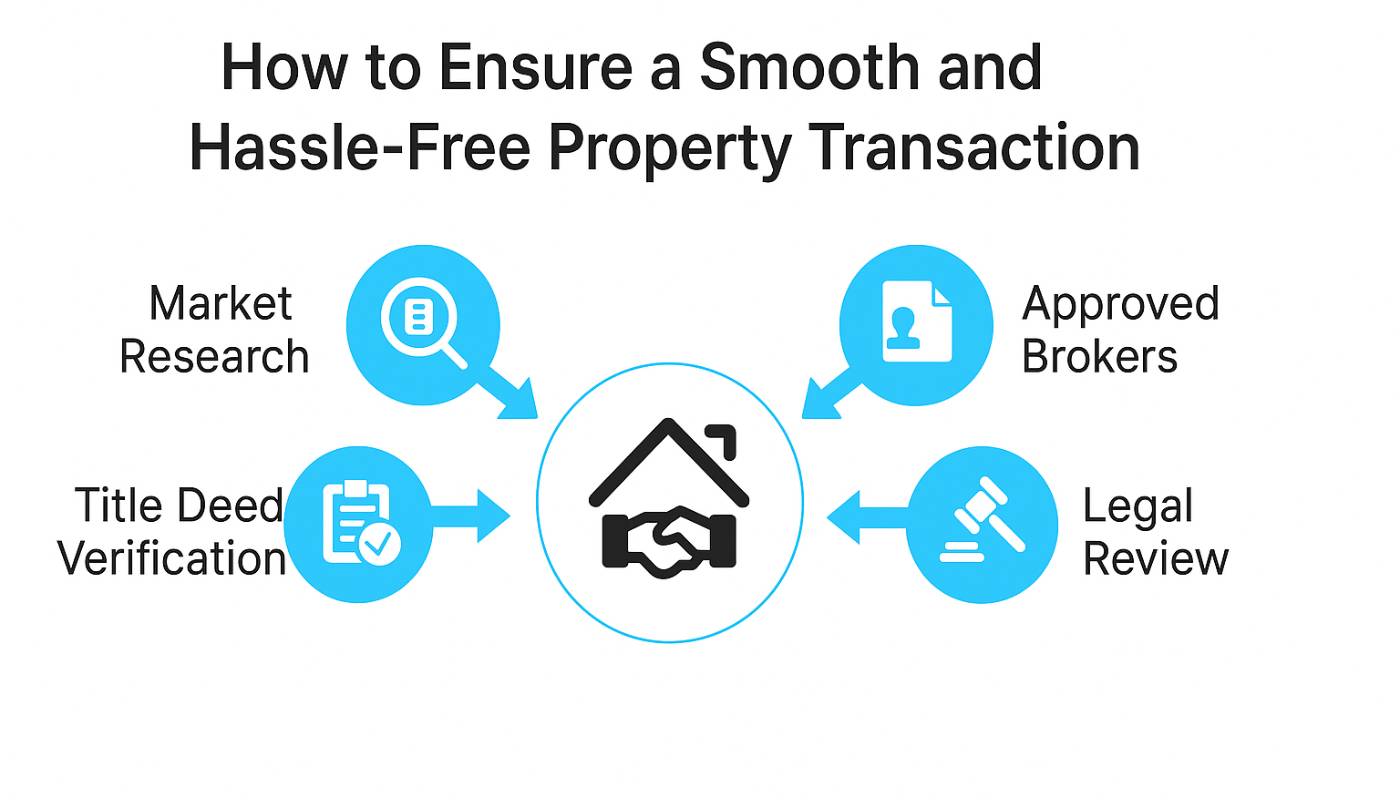
  • Overpaying: To avoid overpaying, look into what similar properties have sold for recently, as asking prices can be misleading. A good strategy is to use data from resources such as the DLD Price Index or consult with a real estate professional who has local market knowledge.
  • Hidden Fees: To ensure a transparent and legal transaction, always choose brokers who are registered with RERA and avoid paying any unofficial, “under the table” fees.

  • Confusing Leasehold with Freehold: The presence of a property in Dubai does not automatically guarantee freehold status. It is crucial to inquire about the specific title deed type before placing any deposit.

Skipping Legal Review:Secure long-term peace of mind by making the small investment of hiring a local real estate lawyer to review your contracts.
UAE Real Estate Investment Guide: Is It Worth It for Expats?

The UAE, and Dubai in particular, presents an exceptional proposition for numerous expatriates and international investors.

  • Tax-free income
  • High rental yields
  • Modern infrastructure
  • Legal protections for foreign buyers

The key to a successful purchase is a smart strategy. This means prioritizing freehold zones, working with a licensed real estate agent, and fully understanding your ownership rights.

FAQs

Q1: Can foreigners buy property anywhere in Dubai?
A: No, foreigners can only buy in designated freehold areas or opt for leasehold arrangements in specific zones.

Q2: What is the difference between freehold and leasehold property?
A: Freehold gives you full ownership of the property and land, while leasehold grants ownership for a set period (up to 99 years) without land ownership rights.

Q3: Do I need a UAE residency visa to own property in Dubai?
A: No, you don’t need a residency visa to buy property, but certain property investments can qualify you for one.

Q4: What fees should I expect when buying property in Dubai?
A: Common fees include Dubai Land Department registration fees, agency commission, and service charges.

Q5: Can I rent out my property if I’m a foreign owner?
A: Yes, foreign owners can rent out their property, but they must comply with Dubai’s tenancy laws and register the lease with Ejari.

Q6: Are there taxes on property ownership in Dubai?
A: No annual property tax, but there are one-time purchase-related fees and annual maintenance charges.

Demo Title

Demo Description


Introducing your First Popup.
Customize text and design to perfectly suit your needs and preferences.

This will close in 20 seconds

[field id="field_2f7c340"]

This will close in 20 seconds