CategoriesBlog

EV Charging Apartments in Dubai: Best Locations, Options & Expert Tips

EV Charging Apartments in Dubai: Best Locations, Options & Expert Tips

The growing popularity of electric vehicles (EVs) is reshaping not only the automotive sector but also Dubai’s real estate landscape. As more people embrace sustainable transportation, apartments equipped with EV charging facilities are becoming a highly preferred feature among modern homebuyers and tenants.

For EV owners, having charging access within the residential building offers unmatched convenience and minimizes the need to rely on public charging networks. Whether you own a Tesla, Nissan Leaf or another electric car, home charging can make daily commuting more efficient and stress-free.

To meet this rising demand, many property developers in Dubai are incorporating EV charging infrastructure into residential communities. From shared charging points to dedicated private chargers, EV-ready apartments are playing a key role in the future of smart and sustainable urban living.

Apartments Equipped With EV Charging Facilities

Electric vehicles are no longer considered a futuristic trend or limited market segment. In the UAE, EV adoption is steadily increasing as government initiatives encourage eco-friendly transportation and residents become more conscious of sustainable living choices. As a result, the need for reliable EV charging infrastructure in residential properties continues to grow.

Apartments that provide EV charging solutions offer several advantages, including convenient overnight charging, less dependence on public charging stations and greater appeal for environmentally conscious residents and investors.

Different Types of EV Charging Solutions in Apartments

Residential developments in Dubai provide a variety of EV charging options based on the property layout, parking facilities and overall building infrastructure. Understanding the available charging systems can help residents choose the right EV-friendly apartment.

Level 1 EV Chargers

Level 1 chargers are among the simplest charging options available for electric vehicles. These chargers use standard 220–240V household power outlets and usually do not require complex installation. This makes them an accessible solution for first-time EV owners.

Typically, Level 1 chargers provide charging speeds between 2.3 kW and 3.7 kW, which can deliver approximately 15–20 kilometers of driving range per hour.

Dedicated Private Wall-Box Chargers

Private wall-box chargers are personalized AC charging systems installed directly within an assigned parking space or private garage. These chargers are designed for convenient overnight charging and are commonly found in premium apartment communities.

Most Level 2 wall-box chargers offer charging capacities ranging from 7 kW to 22 kW, depending on the building’s electrical setup. They can provide nearly 40 km to 130 km of driving range per hour, making them a faster and more efficient option for daily EV charging.

Shared Community EV Charging Stations

Many apartment complexes in Dubai are introducing shared charging stations within common parking areas. Instead of installing individual chargers for every apartment, multiple residents can access a centralized charging hub.

These community charging systems generally operate using AC charging technology with capacities ranging from 7 kW to 22 kW. Shared charging solutions are cost-effective and ideal for residential buildings with a growing number of EV users.

Private Garage EV Chargers

Luxury residential developments are increasingly offering private garages equipped with dedicated EV charging stations. These installations provide residents with greater privacy, convenience and faster access to charging facilities.

However, installing private garage chargers may require approvals from the Dubai Electricity and Water Authority (DEWA) as well as permission from the building management, depending on the property regulations and technical requirements.

How to Find Apartments With EV Charging Facilities in Dubai

Searching for an apartment with EV charging support involves more than simply browsing property images online. To make the right choice, it is important to research the property carefully and confirm whether the building is truly equipped for electric vehicle owners. Here are some effective ways to find EV-friendly apartments in Dubai.

Use dubizzle Smartly

Today, dubizzle offers convenient search filters that help users locate properties with EV-friendly amenities. While exploring listings, use keywords like “EV-ready property,” “EV charging station,” or “EV-ready layouts” to narrow down suitable options. In addition, review parking area photos carefully, as many listings showcase installed charging stations within the building premises.

Speak With the Building Management

Before making a final decision, it is always recommended to discuss EV charging availability with the property management or landlord. Asking the right questions can help you avoid future inconvenience.

Here are a few important things to confirm:

  • Does the building already provide EV charging stations?
  • Are the charging points privately assigned or shared among residents?
  • Can tenants install personal EV chargers if required?
  • Are there any additional maintenance or usage charges?
  • Is there a waiting list for accessing charging spaces?
  • Will the charger support your specific EV model?

Getting clarity on these points beforehand ensures a smoother living experience after moving into the property.

Focus on Newly Developed Residential Communities

Modern residential developments in Dubai are becoming increasingly EV-friendly. Many newly launched communities are designed with advanced infrastructure that supports sustainable living. These projects often include features such as EV charging stations, smart parking systems and energy-efficient technologies, making them a practical choice for electric vehicle owners.0

Dubai Communities with Apartments Offering EV Charging Facilities

Electric vehicle charging is no longer restricted to public charging hubs or commercial locations. Today, many residential developments are integrating EV charging stations into their communities, making it easier for residents to charge their vehicles at home. Several apartment communities in Dubai are already embracing this sustainable lifestyle trend.

Jumeirah Village Circle (JVC)

Jumeirah Village Circle has emerged as one of Dubai’s most EV-friendly residential communities. A growing number of modern developments in the area are incorporating dedicated charging facilities within residential parking spaces. Projects like Luma Park Views provide shared EV charging points for residents, reflecting the community’s focus on smart and sustainable living.

Me’aisem Second

Me’aisem Second is another thoughtfully developed neighbourhood where EV charging facilities are becoming part of everyday residential convenience. Along with lifestyle amenities such as fitness centres, swimming pools and retail outlets, many residential projects in the area now support eco-conscious living through integrated EV infrastructure.

Downtown Dubai

Downtown Dubai is increasingly offering apartments equipped with electric vehicle charging solutions. Luxury residential towers developed by Emaar, including properties within the Opera District, are being designed with EV-ready parking systems and DEWA-connected charging capabilities. This reflects the growing demand for sustainable features in premium urban living spaces.

Business Bay

Business Bay is known for its blend of residential and commercial developments, and many newly launched apartment towers now feature EV charging stations as part of their smart-building amenities. As the UAE continues to encourage sustainable transportation and green mobility initiatives, EV-friendly apartments are expected to become an essential feature of Dubai’s future real estate landscape.

FAQs

1. What are EV charging apartments in Dubai?

EV charging apartments in Dubai are residential properties equipped with dedicated electric vehicle charging stations, allowing residents to conveniently charge their EVs at home.

2. Which areas in Dubai have apartments with EV charging facilities?

Popular areas include Downtown Dubai, Dubai Marina, Business Bay, and newer developments that focus on sustainable and smart living.

3. How can I find apartments with EV charging in Dubai?

You can search on real estate platforms, check property listings with amenities filters, or consult agents specializing in EV-friendly and smart homes.

4. Are EV-friendly apartments in Dubai more expensive?

Yes, in many cases they may have slightly higher rent or prices due to added infrastructure, but they offer long-term convenience and value for EV owners.

5. Do all new apartments in Dubai include EV charging stations?

Not all, but many modern and premium developments are increasingly including EV charging facilities as part of sustainable living initiatives.

6. Can tenants request EV charging installation in Dubai apartments?

In some cases, yes. Tenants can request landlords or building management to install EV chargers, depending on feasibility and building policies.

7. What should I check before choosing an EV charging apartment in Dubai?

Check charger type, availability, parking access, charging costs, and whether the infrastructure supports your specific EV model.
CategoriesBlog

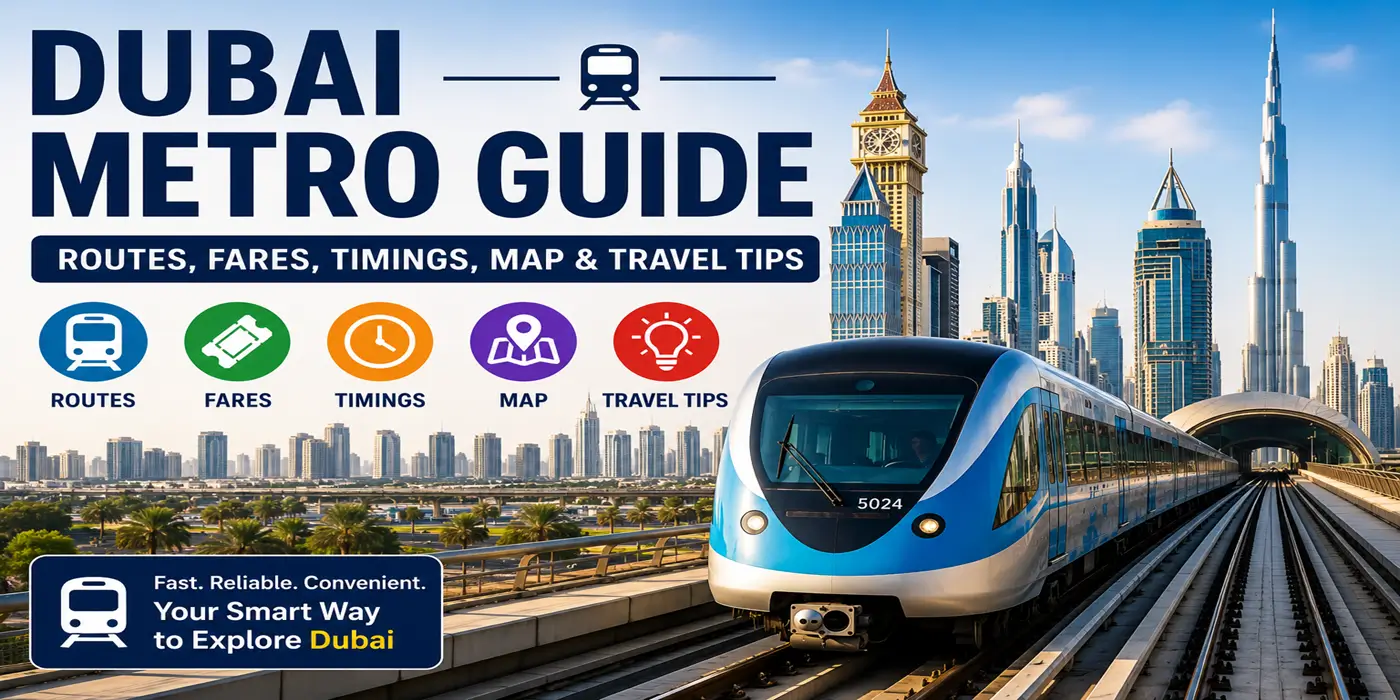
Dubai Metro Guide 2026: Routes, Fares, Timings, Map & Travel Tips

Dubai Metro Guide 2026: Routes, Fares, Timings, Map & Travel Tips

The Dubai Metro is one of the most advanced public transportation systems in the world, serving residents and visitors across the city since September 9, 2009. Managed by the Roads and Transport Authority (RTA), the metro offers a fast, secure and efficient way to travel throughout Dubai.

Whether you are a tourist exploring the city or a resident commuting daily, understanding how the Dubai Metro works can make your journey easier and more convenient. From metro timings and ticket details to routes, stations and travel tips, this guide covers everything you need to know for a hassle-free experience.

Dubai Metro Timings 2025

The Dubai Metro operates every day of the week, although operating hours differ on weekdays and weekends.

Here are the updated Dubai Metro timings for 2025 across all metro lines:

  • Monday to Thursday: 05:00 am to 12:00 am
  • Friday: 05:00 am to 01:00 am
  • Saturday: 05:00 am to 12:00 am
  • Sunday: 08:00 am to 12:00 am

Many travellers often ask whether Dubai Metro timings on Fridays are different. The answer is yes — services begin at 05:00 am and continue until 01:00 am the following day.

Keep in mind that Dubai Metro operating hours may change during public holidays, festivals and major city events. To get the latest schedule updates, it is always recommended to check the official RTA Dubai website

Understanding the Dubai Metro Network

The Dubai Metro network currently consists of two major lines — the Red Line and the Green Line — connecting important residential, commercial and tourist destinations across the emirate.

Red Line

The Red Line operates between Centrepoint (R11) and Expo 2020 (R76), covering several key areas and popular landmarks throughout Dubai.

Additionally, another section of the Red Line connects National Paints (R38) to Life Pharmacy (R42), improving connectivity for commuters travelling across different parts of the city.

Green Line

The Green Line runs from Etisalat by E& (G11) to Creek (G30). This route mainly serves older districts of Dubai, offering convenient access to business hubs, residential communities and cultural attractions.

Dubai Metro Blue Line – Upcoming Expansion

Dubai is also preparing to introduce a new metro route known as the Blue Line. Expected to be completed by 2029, the new line will feature 14 stations along with three interchange stations that will connect with the existing Red and Green Lines.

The upcoming Blue Line project aims to improve connectivity, reduce travel time and support Dubai’s growing transportation needs in the coming years.

Dubai Metro Red Line Introduces Special Peak Hour Route

Dubai’s Roads and Transport Authority (RTA) has announced a new direct service on the Red Line to improve travel during busy hours. This update is designed to help daily commuters enjoy faster, smoother, and less crowded metro journeys, especially during office rush hours.

If you regularly travel for work or want to avoid heavy passenger congestion, the upgraded Dubai Metro Red Line service can make your commute much more convenient.

Key Changes to the Dubai Metro Red Line

The newly introduced direct routes will operate only during peak hours to enhance passenger flow and reduce transfer delays.

Peak Hour Timings

  • Morning: 07:00 AM to 09:00 AM

  • Evening: 04:00 PM to 08:00 PM

New Direct Peak Hour Routes

The Red Line will now offer the following direct services:

  • Centrepoint to Expo 2020 Station (and return)

  • Centrepoint to Life Pharmacy Metro Station (and return)

  • Centrepoint to Al Fardan Exchange Metro Station (and return)

With these new route enhancements, passengers travelling towards terminal stations no longer need to switch trains at National Paints Metro Station, previously known as Jebel Ali Station. This improvement is expected to save time and make travel more efficient for thousands of daily commuters.

Stations Covered Under the Additional Red Line Route

The enhanced Dubai Metro Red Line route will pass through the following stations:

  • Centrepoint Station
  • Emirates
  • Airport Terminal 3
  • Airport Terminal 1
  • Al Garhoud
  • City Centre Deira
  • Al Rigga
  • Union
  • BurJuman
  • ADCB
  • max
  • World Trade Centre
  • Emirates Towers
  • Financial Centre
  • Burj Khalifa/Dubai Mall
  • Business Bay
  • ONPASSIVE
  • Equiti
  • Mall of the Emirates
  • InsuranceMarket
  • Dubai Internet City
  • Al Fardan Exchange

Dubai Metro Map 2025 – Updated Red Line Information

The Dubai Metro network continues to remain one of the most efficient public transport systems in the UAE. The latest Red Line enhancement further improves connectivity and reduces travel interruptions for passengers.

Important Highlights of the Dubai Metro Route

  • The Red Line and Green Line intersect at BurJuman and Union stations, allowing passengers to switch routes easily depending on their travel direction.

  • The metro map uses colour-coded lines, helping commuters identify routes quickly and navigate the system without confusion.

  • During peak hours, metro trains generally arrive every 3 to 7 minutes.

  • During non-peak hours, train frequency ranges between 7 to 15 minutes.

Red Line Y Junction Enhancement

RTA has also upgraded the Red Line network with the addition of the Red Line Y Junction. Because of this improvement, passengers travelling from Centrepoint can now directly reach both Life Pharmacy Metro Station and Expo 2020 Station without changing trains at National Paints Metro Station.

Similarly, commuters travelling from Expo 2020 or Life Pharmacy Metro Station can conveniently travel to Centrepoint Station without needing to switch metro services midway.

This latest Dubai Metro upgrade is expected to improve travel efficiency, reduce crowding, and provide a smoother commuting experience for residents and tourists across Dubai.

Dubai Metro Stations List

Dubai Metro features an extensive rail network with 20 stations on the Green Line and 35 stations on the Red Line, including the Route 2020 extension. Below is the updated and well-organized list of Dubai Metro stations for easy reference.

Dubai Metro Red Line

The Red Line is the longest and one of the busiest metro routes in Dubai. To improve connectivity and reduce transfer time, the line currently operates through three direct service routes:

  • From Centrepoint Station to Expo 2020 Station and return

  • From Centrepoint Station to Life Pharmacy Station and return (previously known as UAE Exchange)

  • From Centrepoint Station to Al Fardan Exchange Station and return during peak operating hours (formerly Al Khail)

The Red Line consists of 35 metro stations and includes important interchange points that connect passengers to other transport networks across Dubai.

Major Interchange Stations on the Red Line

  • BurJuman Station – interchange connection with the Green Line

  • Union Station – interchange connection with the Green Line

  • Sobha Realty Station – connects with Dubai Tram services

  • DMCC Station – connects with Dubai Tram services

Complete List of Dubai Metro Red Line Stations

StationsStationsStationsStationsStations
CentrepointUnionBurj Khalifa / Dubai MallAl Fardan ExchangeLife Pharmacy
EmiratesBurJumanBusiness BaySobha RealtyThe Gardens
Airport Terminal 3ADCBONPASSIVEDMCCDiscovery Gardens
Airport Terminal 1MaxEquitiNational PaintsAl Furjan
Al GarhoudWorld Trade CentreMall of the EmiratesIbn BattutaJumeirah Golf Estates
City Centre DeiraEmirates TowersInsuranceMarketEnergyDubai Investment Park
Al RiggaFinancial CentreDubai Internet CityDanubeExpo 2020

Green Line – Dubai Metro

The Green Line of the Dubai Metro links several historic areas of Dubai with modern commercial and residential districts. This metro route runs between Etisalat by e& Station and Creek Station, operating in both directions for convenient citywide connectivity.

The route consists of 20 metro stations and connects with the Red Line at two major interchange stations:

  • BurJuman Station
  • Union Station

Dubai Metro Green Line Stations

StationsStationsStationsStations
Etisalat by e&Abu HailBaniyas SquareBurJuman
Al QusaisAbu Baker Al SiddiqueGold SouqOud Metha
Dubai Airport Free ZoneStadiumAl RasDubai Healthcare City
Al NahdaSalah Al DinAl GhubaibaAl Jadaf
Al QiyadahUnionSharaf DGCreek

For people planning to live close to public transportation, there are many affordable residential communities located near Dubai Metro stations, offering easy daily commuting and improved accessibility across the city.

It is also important to note that some Dubai Metro stations may be renamed over time under Dubai’s station naming rights programme. Staying updated with the latest station names can help travellers and residents navigate the metro network more efficiently.

Facilities Available at Dubai Metro Stations

Passengers travelling through the Dubai Metro can enjoy a wide range of modern facilities designed to ensure comfort, convenience and safety. The following amenities are available across RTA Dubai Metro stations:

  • High-speed Wi-Fi connectivity
  • Emergency call boxes for quick assistance
  • More than 3,000 CCTV surveillance cameras
  • Dedicated metro police for passenger safety
  • Tactile guidance paths for visually impaired travellers
  • Elevator and lift accessibility
  • Platform safety alert systems
  • Digital information and announcement displays
  • Wheelchair-friendly access throughout stations
  • Direct radio communication systems to contact authorities during emergencies

Using the Dubai Metro: Tickets, Fares and Payment Options

RTA Dubai Metro Zones

The Dubai Metro network follows a zone-based fare structure that helps passengers calculate travel costs accurately. The metro map highlights all operational zones, making it easier for commuters to understand their route and applicable fare.

Following the launch of Route 2020 stations, the current Dubai Metro zones include: Zone 1 Zone 2 Zone 3 Zone 5 Zone 6

Important Things to Remember About Dubai Metro Fares

  • Dubai Metro ticket prices are calculated based on the number of zones crossed during the journey.

  • The same fare zones are applicable when transferring between the metro and other public transport services, including buses, trams and water buses.

  • Travellers must carry a valid ticket or Nol card and tap in and tap out at the entry and exit gates to avoid fines or penalties.

  • A trip involving two different public transport modes is considered a single journey if the transfer is completed within 30 minutes.

Dubai Metro Tickets and Fare Guide

Travelling on the Dubai Metro requires a valid NOL card, which is a smart payment card used across Dubai’s public transportation network. It can be used on the metro, buses, trams, and other public transit services throughout the city. Passengers can purchase a NOL card at any Dubai Metro station and recharge it with balance whenever needed.

The starting fare for a single metro journey is AED 3, while the maximum fare can go up to AED 7.50, depending on the travel zones covered during the trip.

Dubai Metro Payment Method – NOL Cards

Dubai offers several types of NOL cards, each designed to suit different travel needs and passenger categories. The Dubai Metro ticket price also varies according to the card type you choose, including Gold, Silver, Personalised, and Red Ticket options.

Gold Card

  • Price: AED 25 (includes AED 19 balance)

  • Provides access to exclusive Gold Class cabins on Dubai Metro and Dubai Tram

  • Suitable for passengers looking for a premium and more comfortable travel experience

Silver Card

  • Price: AED 25 (includes AED 19 balance)

  • Allows travel in all standard metro and tram cabins

  • One of the most commonly used NOL cards for regular commuters

Blue Card / Personalised Card

  • Regular price: AED 70 with AED 20 travel credit

  • Best suited for students, senior citizens, adults, people of determination, and social affairs beneficiaries

  • Required for passengers eligible for discounted or concession fares

  • Offers additional security and personalised features

Red Ticket

  • Price starts from AED 2

  • Designed for single or limited trips on the Dubai Metro

  • Can only be used for one mode of transport at a time

  • Rechargeable and can be loaded with up to 10 journeys

Before entering the metro station, passengers must ensure that their NOL card contains sufficient balance. Travelling without a valid card or enough credit is considered a violation and may lead to fines or penalties.

How Much Does Dubai Metro Cost?

Dubai Metro fares are calculated based on the number of travel zones crossed during the journey and the type of NOL card used.

Below is a detailed overview of Dubai Metro ticket prices:

Travel ZonesSilver CardGold CardPersonal CardRed Ticket
Within 1 ZoneAED 3AED 6AED 3AED 4
2 Adjacent ZonesAED 5AED 10AED 5AED 6
More than 2 ZonesAED 7.50AED 15AED 7.50AED 8.50

Dubai Metro Monthly Pass

Dubai Metro also offers monthly travel passes for frequent commuters. With a monthly pass, passengers can enjoy unlimited travel on the metro throughout the month without purchasing individual tickets for every journey.

This facility is available for:

  • NOL Silver Card users

  • NOL Gold Card holders

  • NOL Red Ticket users

A monthly metro pass is an economical and convenient option for residents and daily travellers who regularly use Dubai’s public transportation system.

How to Check Dubai Metro Card Balance

Checking your Dubai Metro card balance is quick and convenient. Passengers can easily view their remaining balance through multiple methods while travelling across Dubai.

One of the easiest ways to check the balance is by tapping the card at the metro gate during check-in or check-out. The available balance instantly appears on the display screen.

Passengers who recharge their NOL card at Dubai Metro stations can also see the updated balance immediately after the recharge process is completed.

Regular metro commuters often prefer using the RTA app or the NOL Pay app to check their NOL card balance, recharge the card, and manage transactions anytime from their smartphone.

Another simple option is visiting the official RTA website. Users only need to enter their NOL Tag ID in the search section to view the available balance on the screen within seconds.

Dubai Metro Train Cabins

Dubai Metro offers different types of train cabins to provide passengers with a comfortable and organised travel experience.

Gold Class Cabin

Located at the front section of the train, the Gold Class Cabin is specially reserved for passengers holding a Gold NOL Card. These cabins offer premium seating and a more comfortable travelling environment.

Ladies & Children’s Cabin

Dubai Metro also features dedicated cabins for women and children. These compartments can be accessed using any type of NOL card and are generally positioned at the end of the train to ensure a safer and smoother journey for female passengers and children.

Standard Class Cabin

The Standard Class Cabin is the general compartment available for all metro travellers. Passengers with any valid NOL card can use this cabin for daily commuting across the Dubai Metro network.

Parking Facilities at Dubai Metro Stations

Several Dubai Metro stations provide complimentary parking facilities for commuters who prefer travelling by private vehicle before continuing their journey by metro.

On the Red Line, free parking is available at Centrepoint, Jumeirah Golf Estates, and National Paints Metro Stations. Meanwhile, passengers using the Green Line can access free parking at Etisalat by E& Metro Station.

Dubai Metro Travel Rules and Important Guidelines

Dubai’s public transportation system operates under strict safety regulations and monitoring to ensure a smooth travel experience for all passengers. While using the Dubai Metro, travellers should follow these important rules:

  • Passengers must board the correct cabin according to their NOL card category. Each coach is clearly labelled, and violating cabin rules may result in a fine of up to AED 100.

  • Eating, drinking, or chewing gum inside the metro is strictly prohibited. Commuters caught chewing gum can face a fine of AED 100.

  • Sleeping in metro waiting areas is not permitted.

  • Sitting on the floor or standing between train coaches is also against metro regulations.

  • Misusing the emergency button without a genuine emergency can lead to a hefty fine of AED 2,000.

  • According to Dubai Metro luggage regulations, each passenger can carry up to two suitcases — one large and one small. These bags must be placed in the designated luggage storage areas inside the train compartments.

Before travelling, it is always advisable to review Dubai public transport rules to enjoy a safe, comfortable, and hassle-free journey.

Quick Facts About Dubai Metro

  • Total number of Dubai Metro trains: 129

  • Number of metro zones in Dubai: 7

  • Dubai Metro ticket fare: Starts from AED 3 and goes up to AED 7.50

  • Total metro stations: 30 on the Red Line, 5 on Route 2020, and 20 on the Green Line

  • Wi-Fi availability: Yes, Wi-Fi services are available

  • Luggage allowance: Yes, passengers can carry luggage within the approved size limits mentioned above

FAQs

1. What are the Dubai Metro timings?

Dubai Metro typically operates from early morning to midnight, with extended hours on weekends. Timings may vary by line and day, so checking the latest schedule is recommended.

2. How much does the Dubai Metro cost?

Dubai Metro fares depend on the number of zones traveled. Ticket prices are affordable and vary based on Nol card type and travel distance.

3. How many lines are there in the Dubai Metro?

The Dubai Metro currently has two main lines: the Red Line and the Green Line, connecting major attractions, business hubs, and residential areas.

4. Is the Dubai Metro easy for tourists to use?

Yes, the Dubai Metro is tourist-friendly with clear signage, English announcements, and easy ticketing through Nol cards, making it convenient for first-time visitors.

5. Can I use a Nol card on the Dubai Metro?

Yes, a Nol card is required to travel on the Dubai Metro. It can also be used on buses, trams, and other public transport in Dubai.

6. Is Dubai Metro safe and clean?

Dubai Metro is known for its high safety standards, cleanliness, and modern facilities, making it one of the best public transport systems in the world.

CategoriesBlog

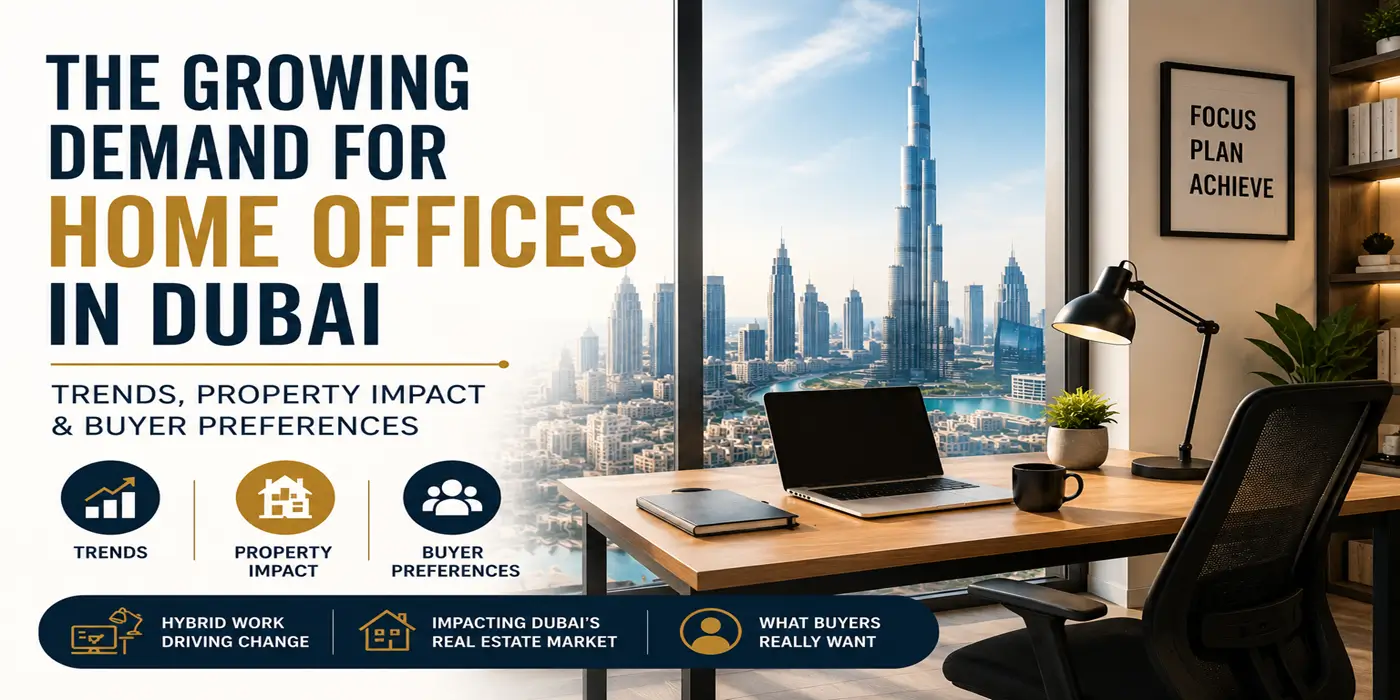
Dubai Home Office Demand in 2026: Key Trends, Property Impact & Buyer Preferences

Dubai Home Office Demand in 2026: Key Trends, Property Impact & Buyer Preferences

A few years ago, having a home office in Dubai was considered an added luxury. In 2026, it has become one of the main priorities for many property buyers and tenants.

With hybrid work models becoming increasingly common and long-term residency opportunities making Dubai a more secure place to settle, people are no longer searching only for a comfortable home. They are looking for a property that supports both their personal and professional lives.

From dedicated office rooms to adaptable floor plans and quiet working corners, the growing need for home workspaces is influencing how properties across Dubai are designed, valued, and selected.

Why the Demand for Home Offices in Dubai Is Increasing

Modern homes in Dubai are now expected to accommodate both living and working needs. Buyers and renters are paying closer attention to how functional a property is on a daily basis, especially when it comes to privacy, comfort, productivity, and work-life balance.

At the same time, wider changes such as flexible employment structures and attractive residency programs are accelerating this trend. Home offices are no longer viewed as optional features; they have become an essential factor when choosing properties in Dubai.

Hybrid Working Has Become the New Normal

A growing number of professionals now divide their time between office spaces and remote work. This shift has significantly changed what people expect from their homes.

Temporary work setups at dining tables or in living rooms are no longer practical for long-term productivity. Buyers are increasingly searching for properties with dedicated work areas that help create a clear distinction between professional responsibilities and personal life.

Because of this, homes offering flexible layouts, quieter spaces, and improved sound insulation are attracting far greater interest in Dubai’s real estate market.

Residents Are Planning for Long-Term Living

Government initiatives such as the UAE Golden Visa have encouraged many residents to view Dubai as a long-term home rather than a temporary destination.

Instead of relying on short-term rental arrangements, more individuals and families are investing in property ownership. As buyers plan for the future, they are prioritising homes that can comfortably support their lifestyle for many years.

A well-designed home office or dedicated workspace has therefore become an important part of modern property expectations.

Lifestyle Preferences Are Evolving

Buyer priorities have also changed considerably over the past few years. Features such as spacious interiors, privacy, natural lighting, and peaceful surroundings are now more important than ever.

This trend is particularly noticeable among professionals and families who spend a large portion of their day working remotely. A calm and functional home environment is no longer just desirable; it plays a major role in productivity, comfort, and overall quality of life.

How Housing Demand Is Changing Across Dubai

One of the most noticeable outcomes of the remote and hybrid work trend is the shift in residential demand across different parts of Dubai. As homebuyers’ lifestyles and priorities evolve, their preferred locations are changing as well.

Earlier, many residents focused mainly on living close to business districts and office hubs. Today, however, buyers are increasingly exploring communities that provide larger living spaces, peaceful surroundings, and stronger long-term value.

With work-from-home flexibility becoming more common, spacious homes and low-density neighborhoods have become significantly more attractive. People are now prioritising comfort, privacy, and functionality over simply reducing commute times.

For modern buyers, choosing a home is no longer only about proximity to the workplace. Instead, they are searching for properties that can support both professional productivity and a comfortable lifestyle every single day.

Preferred Communities for Remote & Hybrid Working Professionals

Several residential communities in Dubai are becoming highly desirable among buyers looking for work-friendly homes, including:

  • Arabian Ranches
  • Jumeirah Village Circle (JVC)
  • Dubai South
  • Mudon
  • The Valley
  • Tilal Al Ghaf

These locations are especially popular because they typically offer spacious layouts, quieter surroundings, family-friendly environments, and a healthier balance between work and personal life.

Why Buyers Prefer These Communities

FactorWhy It Matters
Spacious LayoutsProvides enough room to create a comfortable and productive home office setup
Affordable Property OptionsBuyers can access larger homes at comparatively better prices
Smart Community PlanningGreen spaces, cafés, and pedestrian-friendly surroundings improve everyday living
Peaceful EnvironmentReduced traffic and noise help increase focus and work efficiency

The Influence of Home Offices on Property Prices

One of the biggest changes in today’s real estate market is the growing impact of home office spaces on property values. Features that were previously considered optional lifestyle upgrades have now become an important factor in determining a property’s worth.

Modern buyers are actively searching for homes that support remote and hybrid working. Properties with flexible layouts, private workspaces, and practical designs are attracting stronger demand and often command higher prices. In many cases, these homes also show better long-term investment potential because work-from-home requirements continue to shape buyer preferences.

Price Premium for Remote Work Features

The demand for work-friendly homes in Dubai has significantly influenced property pricing trends. Homes equipped with dedicated office areas and modern connectivity features are consistently valued higher than standard properties, especially in high-demand residential communities.

Although pricing premiums vary based on location, property type, and design quality, some features clearly add more value than others. The table below outlines the average increase buyers are willing to pay for remote work-friendly amenities.

FeatureAverage Premium
Dedicated Home Office Space+25% to 34%
Fast Internet & Smart Connectivity+15% to 20%
Balcony or Outdoor Area+5% to 15%
Community Co-Working Spaces+12% to 16%
Natural Lighting & Quiet Surroundings+10% to 15%

In prime locations such as Downtown Dubai and Business Bay, these amenities are no longer viewed as luxury upgrades. Instead, they have become essential factors influencing property buying decisions.

Rental and Resale Value
Homes designed to support remote working are consistently delivering stronger market performance. These properties are attracting greater buyer and tenant interest, which directly impacts both rental and resale potential.

Key advantages include:

  • Faster property sales due to increasing demand
  • Higher tenant attraction and occupancy rates
  • Improved rental returns and long-term investment value

Among all property types, villas are currently experiencing more significant price appreciation compared to apartments. One of the main reasons is the additional space they provide, which modern buyers now consider a top priority.

What Modern Buyers and Tenants Prefer

Today’s property seekers are focused on more than just extra square footage. They want homes that support productivity, comfort, and a balanced lifestyle.

A practical home office is expected to blend naturally with the overall home environment while providing enough comfort for extended working hours. Buyers and tenants are increasingly prioritising layouts that help them stay focused, organised, and maintain a healthy separation between professional and personal life.

Essential Features Buyers Look For

Modern homebuyers and renters now consider these features highly important:

  • A dedicated room or clearly defined workspace

  • Access to ample natural light

  • Reduced external noise and distractions

  • Stable high-speed internet connectivity

  • Enough room for ergonomic furniture and work setups

Additional Features That Are Becoming Standard

While not always mandatory, these amenities are increasingly influencing purchasing decisions:

  • Balcony or outdoor living access

  • Smart home technology integration

  • Custom-built storage and workspace solutions

  • Nearby cafés, business hubs, or co-working facilities

Location Preferences Are Changing

Location still plays a major role in real estate decisions, but buyer priorities have evolved significantly.

Instead of selecting properties solely based on proximity to offices, people are now searching for well-connected communities that provide flexibility and convenience. Residential areas with easy access to highways, expanding metro networks, and lifestyle-focused amenities are becoming more desirable, especially communities designed around a balanced “live-work-play” lifestyle.

How Developers and Investors Are Responding to the Shift

The growing demand for work-friendly homes is actively reshaping the way residential projects are planned, developed, and promoted across Dubai. What was once considered an added luxury has now become an essential requirement. Home office spaces are no longer optional additions — they are now a key part of modern residential design, especially in newly launched communities.

Evolving Design Approaches in New Residential Projects

Developers are redesigning modern homes to better align with the daily needs of remote and hybrid professionals. Instead of treating workspaces as temporary add-ons, they are now being thoughtfully incorporated into the overall structure and layout of the property.

Modern developments are increasingly focused on flexible living concepts that allow residents to transition smoothly between work and personal life. Greater attention is also being given to practicality, comfort, and productivity, ensuring homes remain functional even during extended working hours.

Some of the most common features now seen in new developments include:

  • Multi-functional rooms that can adapt to different lifestyle needs

  • Dedicated office corners and built-in partition areas

  • Better sound insulation and enhanced natural lighting

  • Advanced connectivity solutions and smart home integration

Changing Investment Preferences

Investors are also adjusting their property strategies to match these changing lifestyle trends. Homes designed for remote and hybrid working professionals are increasingly viewed as stable and future-ready investments because they attract a broader segment of tenants and buyers.

Properties with dedicated work-friendly layouts often experience quicker leasing activity and more consistent buyer interest. This helps strengthen rental returns while also supporting long-term resale potential. At the same time, commercial office spaces continue to maintain steady performance, showing that Dubai’s real estate market is successfully balancing both remote-working and office-based lifestyles.

Risks and Important Factors to Monitor

Although the market outlook remains positive, there are still several factors buyers and investors should carefully consider.

Certain emerging communities may develop faster than the surrounding infrastructure, which could impact convenience and long-term living standards. In addition, rising price premiums for homes with office-friendly features may create affordability concerns for middle-income buyers.

Future workplace trends also remain uncertain. If a larger number of companies shift back toward fully office-based operations, the current demand for home office spaces could gradually change. Moreover, the anticipated increase in housing supply after 2026 may help balance property prices and reduce the premium currently associated with work-from-home properties.

Despite these considerations, the overall direction of the market continues to remain strong, driven by evolving lifestyle preferences and changing work habits.

Conclusion

Home offices have evolved from being a secondary feature to becoming a major influence in Dubai’s residential property market. They are now impacting how homes are planned, valued, and selected by buyers. Modern homeowners are prioritising space, flexibility, functionality, and long-term comfort, which is increasing demand for larger homes and developing communities. Although competition and pricing continue to rise, thoughtfully designed, work-friendly properties remain one of the best-performing real estate segments in 2026.

FAQs

1. Why is the demand for home offices increasing in Dubai in 2026?

The demand for home offices in Dubai is rising due to hybrid work models, remote jobs, and the need for dedicated workspaces within residential properties.

2. How are home offices impacting Dubai’s real estate market?

Home offices are influencing property designs, increasing demand for larger homes, and boosting the value of properties with dedicated workspace areas.

3. What features do buyers look for in a home office in Dubai?

Buyers prefer quiet spaces, natural lighting, high-speed internet connectivity, ergonomic layouts, and separate rooms for productivity.

4. Are home offices increasing property prices in Dubai?

Yes, properties with home office spaces often command higher prices due to increased demand and changing buyer preferences.

5. Which areas in Dubai are popular for homes with office spaces?

Popular areas include family-friendly communities and villas or apartments that offer extra rooms suitable for home offices.

6. Will the demand for home offices in Dubai continue to grow?

Yes, with the continued adoption of remote and hybrid work, the demand for home offices in Dubai is expected to grow beyond 2026.

CategoriesBlog

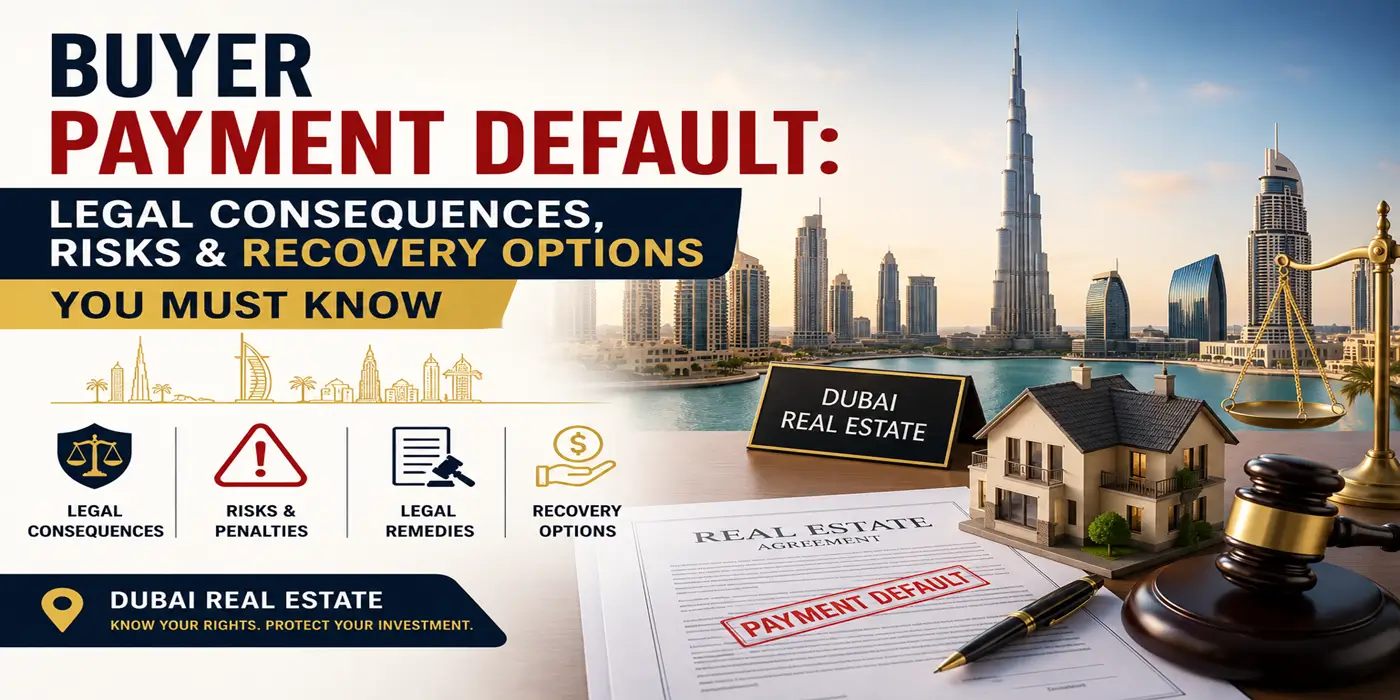
Buyer Payment Default: Legal Consequences, Risks & Recovery Options You Must Know

Buyer Payment Default: Legal Consequences, Risks & Recovery Options You Must Know

Purchasing an off-plan property in Dubai is considered a smart investment opportunity for both local and international buyers. Since these properties are bought during the construction stage, investors often benefit from attractive pricing, flexible payment plans, and the potential for high future returns. However, financial circumstances can change unexpectedly, making it difficult for some buyers to continue meeting scheduled payments.

When a buyer defaults on payments for an off-plan property in Dubai, the developer has the legal right to issue a formal notice, inform the Dubai Land Department (DLD), and in certain situations, cancel the Sales and Purchase Agreement (SPA). Depending on the stage of construction, buyers may also lose a considerable portion of the amount already paid. In this guide, we will explain the legal consequences of payment default, buyers’ rights, and the practical steps involved in the process.

Understanding Off-Plan Properties in Dubai

Before discussing payment defaults, it is essential to understand what off-plan properties are. Off-plan properties are real estate units sold before completion, often during the early stages of development or even before construction officially begins. These projects are highly popular in Dubai because they provide a more affordable way to enter the city’s growing real estate market.

One of the main advantages of off-plan investments is the availability of flexible payment plans. Buyers usually pay in installments linked to construction milestones, which reduces immediate financial pressure. Typically, a portion of the property price is paid during construction, while the remaining balance is cleared upon project completion or handover.

Due to lower initial costs, strong rental demand, and the possibility of significant capital appreciation, off-plan properties continue to attract investors from around the world.

What Happens If You Miss a Payment?

If a buyer fails to make a scheduled payment, developers generally begin by sending a payment reminder. In most cases, buyers are offered a grace period ranging from 15 to 30 days to settle the outstanding amount.

If you are facing financial difficulties, it is always advisable to communicate with the developer as early as possible. Many developers may be willing to discuss revised payment arrangements or temporary solutions depending on the situation.

However, if the payment is not made within the grace period, late payment charges may be applied according to the terms mentioned in the Sales and Purchase Agreement (SPA). Continued non-payment can lead the developer to officially report the matter to the Dubai Land Department (DLD) and the Real Estate Regulatory Agency (RERA), which may trigger legal procedures and potential contract termination.

Understanding Buyer Default in Dubai Off-Plan Property Payments

A buyer default in Dubai’s off-plan property market occurs when a purchaser fails to comply with the payment terms mentioned in the Sales and Purchase Agreement (SPA). The SPA is a legally enforceable contract that clearly defines the conditions of the property transaction, including payment schedules, cancellation clauses, and the responsibilities of both the buyer and the developer.

When a buyer does not fulfil these financial obligations, it is considered a breach of contract and may result in legal consequences. In Dubai, such matters are regulated by the Dubai Land Department (DLD) and the Real Estate Regulatory Agency (RERA), ensuring transparency and legal protection for all parties involved.

What Happens If the Buyer Does Not Comply With the Agreement?

If a buyer fails to meet the agreed payment commitments, the procedures outlined under Article 11 of Law No. 19 of 2017, which amended Law No. 13 of 2008 regarding the Interim Real Property Register in Dubai, come into effect. This law explains the legal actions that developers and the Dubai Land Department can take against a defaulting buyer.

The process generally includes the following steps:

  • The developer is required to officially notify the Dubai Land Department (DLD) about the buyer’s failure to pay the due instalment.
  • Once the DLD verifies that the buyer has breached the agreement, it may issue a 30-day formal notice requesting the buyer to settle the outstanding payment. This notice must be documented in writing, dated properly, and delivered through approved channels such as personal delivery, registered mail, email confirmation, or any legally accepted communication method.
  • In certain cases, the DLD may attempt to facilitate an amicable settlement between the buyer and the developer to resolve the dispute without further escalation.
  • If the buyer still fails to fulfil the payment obligations after the notice period expires, and no mutual settlement is reached, the DLD may proceed in favour of the developer according to Law No. 19 of 2017. At this stage, the DLD issues an official statement confirming:
    • The developer has complied with all legal procedures and requirements outlined by the Dubai Land Department.
    • The percentage of construction completion of the off-plan property project will be assessed based on the regulations and standards established by RERA.

What Legal Steps Can a Developer Take?

Once a formal notice has been issued, developers are legally entitled to take action against buyers who fail to meet their off-plan property payment obligations. The legal remedies available generally depend on how much of the project has been completed. Under Dubai Law No. 19 of 2020, which amended Law No. 13 of 2008, developers may proceed with the following measures:

When the Project is More Than 80% Complete

If the project has crossed the 80% completion mark, the developer can continue enforcing the Off-Plan Sale Agreement. In this situation, the developer has the right to retain all installments already paid by the buyer and request payment of the remaining outstanding amount.

Alternatively, the developer may approach the Dubai Land Department (DLD) and request the property unit to be sold through a public auction. The purpose of the auction is to recover the unpaid balance owed to the developer, while the buyer may also be held responsible for any costs associated with the sale process.

When the Project Completion is Between 60% and 80%

For projects that are completed between 60% and 80%, the developer can legally terminate the sale agreement without requiring the buyer’s consent. In such cases, the developer is permitted to deduct up to 40% of the total property purchase value and return the remaining amount to the buyer.

According to the law, the refund must be processed within 60 days after the property is resold or within one year from the date the agreement is canceled, whichever applies first.

When the Project is Less Than 60% Complete

If construction has officially started according to the approved plans issued by the relevant authorities, but the overall completion remains below 60%, the developer still has the right to cancel the agreement unilaterally.

In this scenario, the developer can retain up to 25% of the unit’s total value and refund the remaining amount to the purchaser.

When Construction Has Not Yet Started

If the project construction has not commenced at all, the developer is obligated to refund the buyer’s payments in full. This provision is designed to protect investors and ensure fair treatment in stalled or delayed projects.

Is It Possible to Negotiate with the Developer?

Absolutely. In fact, open communication with the developer is often the best way to protect your investment and avoid legal complications. Buyers facing financial difficulties can discuss several alternatives with the developer, including extending the payment timeline, restructuring installment plans, providing proof of financial hardship, or even switching to a property with a lower price point.

Taking proactive steps early can help both parties reach a practical and mutually beneficial solution.

Conclusion

Defaulting on off-plan property payments in Dubai can lead to serious legal and financial consequences. To maintain transparency and fairness, the Dubai Land Department (DLD) and the Real Estate Regulatory Agency (RERA) have established clear procedures that govern such cases. The legal outcome mainly depends on the project’s stage of completion.

However, buyers are not without options. Open communication with the developer or seeking assistance from RERA can often help resolve disputes more effectively. If you are struggling with off-plan property payments, professional guidance from experienced real estate experts like Icon Real Estate can help you understand your rights and reduce potential financial losses.

FAQs

1. What happens if a buyer defaults on payment?

If a buyer defaults on payment, the seller can take legal action, charge penalties, or terminate the agreement depending on the contract terms and applicable laws.

2. What legal actions can be taken against a buyer who does not pay?

Legal actions may include sending a legal notice, filing a civil case for recovery, initiating arbitration, or enforcing contract clauses.

3. Can a seller recover money from a defaulting buyer?

Yes, sellers can recover dues through legal proceedings, debt recovery methods, or settlement negotiations.

4. What are the risks of payment default for buyers?

(more…)
CategoriesBlog

Is Buying a Distress Sale in Dubai Real Estate a Smart Investment? Risks & Profit Potential

Is Buying a Distress Sale in Dubai Real Estate a Smart Investment? Risks & Profit Potential

Have you ever noticed a property in Dubai being sold at a price much lower than similar nearby units and wondered why? This situation often attracts both investors and homebuyers looking for a profitable deal. At the same time, sellers may be trying to exit quickly due to financial pressure or personal circumstances. However, a lower price does not always guarantee a risk-free opportunity.

In Dubai’s property market, distressed properties can appear highly attractive in the beginning. Still, the reduced price usually reflects a deeper issue behind the sale. It may involve mortgage liabilities, urgent relocation, off-plan payment difficulties, visa-related concerns, or immediate business cash requirements. In many situations, the seller prioritizes a fast transaction instead of waiting for full market value.

That is why understanding distress sales properly is important before making any decision. Buyers should know the potential risks, legal process, and investment opportunities connected to these properties. Likewise, sellers should understand how to manage the process strategically instead of accepting the first available offer under pressure.

A smart buyer looks beyond the discounted price and studies the complete situation carefully. In the same way, a responsible seller focuses on timing, negotiation, and proper market positioning to secure the best possible outcome.

What Is a Distress Sale?

A distress sale in real estate refers to a property transaction where the owner sells the asset quickly due to financial or personal pressure, often at a price lower than the current market value. In simple words, the seller’s urgent need to close the deal becomes more important than earning maximum profit.

Several situations can lead to a distress sale, including:

  • Financial debt or loan pressure
  • Mortgage repayment issues
  • Job loss or relocation abroad
  • Divorce or family-related matters
  • Medical emergencies
  • Business cash flow problems
  • Off-plan payment burdens

The key factor in a distress sale is urgency. The property owner usually has limited flexibility to wait for better offers or keep the property listed for a long period. As a result, buyers may get the opportunity to purchase the property below standard market pricing.

Many investors searching for discounted real estate often ask about the actual meaning of distress sale property in Dubai. The answer is straightforward: it is a property being sold because the owner urgently needs to sell, not because the market timing is ideal.

In Dubai, distress sales are relatively common due to the city’s expat-driven property market. Sudden job transfers, visa changes, or financial challenges can force owners to exit quickly. In most cases, the property itself remains valuable and well-located. The discounted price is usually connected to the seller’s situation rather than the quality of the asset.

How Distress Sales Work in Dubai Real Estate

Compared to a standard property transaction, a distress sale in Dubai typically moves much faster. Sellers often list the property below prevailing market rates to attract immediate buyers and complete the transaction before financial pressure increases further.

If the property is mortgaged, the bank becomes directly involved in the process. For off-plan units, developers may also need to approve the transfer before the deal can proceed.

Step-by-Step Distress Sale Process

The process generally begins when the owner faces an urgent financial or personal situation. The property is then listed at a competitive price to generate quick interest from investors or end users.

Here is how the process usually works:

  1. The seller experiences financial or personal pressure

  2. The property is listed below nearby market prices

  3. Buyers evaluate the title, payment status, and market value

  4. Negotiations focus on speed and buyer readiness

  5. The bank reviews mortgage liabilities if financing exists

  6. Necessary approvals and clearances are completed

  7. Ownership transfer takes place through the Dubai Land Department

Because time is a critical factor in distress sales, buyers with ready funds or mortgage pre-approval often have a strong advantage during negotiations.

Role of Developers, Banks & Brokers

Every party involved in a distress sale has a specific responsibility in ensuring the transaction moves smoothly.

Developers

In off-plan property sales, developers review outstanding payments, transfer eligibility, and assignment conditions before approving the transfer.

Banks

When a property carries a mortgage, banks calculate pending liabilities, issue clearance requirements, and guide the mortgage settlement process before releasing the property.

Real Estate Brokers

Experienced brokers play an important role in managing distress sales. Their responsibilities include:

  • Setting realistic pricing

  • Finding serious buyers

  • Managing negotiations

  • Coordinating documentation

  • Ensuring a timely closing process

A skilled broker also helps filter non-serious inquiries, which is important because lower-priced properties often attract unnecessary attention alongside genuine buyers.

Common Reasons Behind Distress Sales

Distress sales usually happen due to multiple financial or personal pressures rather than a single issue.

Some of the most common reasons include:

  • Overseas relocation or job transfer
  • Mortgage default and debt repayment pressure
  • Divorce and asset distribution
  • Business losses or liquidity shortages
  • Medical emergencies
  • Legal complications
  • Off-plan installment payment stress before handover

In Dubai, relocation is one of the biggest factors behind distress property sales. Many property owners initially plan long-term investments, but unexpected life changes force them to sell quickly.

In other situations, investors may own multiple assets and decide to sell one property urgently to free up cash for another financial commitment. In such cases, the distress sale reflects a broader financial adjustment rather than a problem with the property itself.

Common Reasons Behind Distress Sales

Distress sales in the UAE property market can take different forms, and each comes with its own process, level of risk, and approval requirements. For buyers and investors, understanding these differences is essential before making any decision, as the legal procedures and transaction timelines may vary significantly.

Short Sales

A short sale takes place when a property owner agrees to sell the property for an amount lower than the outstanding mortgage value. In such situations, the lender or bank must approve the transaction before the sale can move forward.

During this process, the financial institution carefully evaluates the seller’s financial condition, the remaining loan balance, and the expected loss amount before granting approval. Because of these additional steps, short sales usually require detailed coordination between the buyer, seller, and lender.

Buyers should understand that accepting the offered price does not automatically mean the mortgage clearance has been finalized. Proper verification and approval from the lender remain a critical part of the transaction.

Foreclosure Sales

A foreclosure sale begins when the lender initiates legal proceedings after the borrower fails to meet repayment obligations. Once this process starts, the control of the property gradually shifts from the owner to the financial institution. The asset may then proceed toward repossession or public auction.

This creates a major distinction in the discussion of distress sale vs. foreclosure in the UAE real estate market. In a distress sale, the owner still retains some level of involvement and decision-making authority. In contrast, foreclosure removes that control entirely.

As a result, the pricing structure, legal procedures, negotiation flexibility, and transaction timeline can change considerably once foreclosure action is initiated.

Off-Plan Distress Sales

Off-plan distress sales usually involve investors who decide to exit a project before the property handover stage. This may happen due to financial pressure, difficulties managing installment payments, changing market conditions, or other personal financial commitments.

Such opportunities may appear attractive to buyers, especially in high-demand or premium developments. However, these transactions require careful due diligence. Buyers should thoroughly review developer approvals, payment records, outstanding installments, transfer fees, and expected handover schedules before proceeding.

Why Distress Sales Often Result in Financial Losses

In many cases, distress sales lead to lower financial recovery for the seller because the market quickly recognizes the urgency behind the transaction. Once buyers sense that the seller is under pressure, they often negotiate more aggressively, reducing the seller’s bargaining power.

Several factors contribute to financial losses in distress sale situations, including:

  • Buyers taking advantage of urgent circumstances
  • Limited marketing exposure and shorter selling periods
  • Ignoring accurate market comparisons during pricing
  • Mortgage-related pressure reducing negotiation flexibility
  • Poor property presentation affecting buyer interest and offer quality

Unrealistic or artificially reduced pricing can also create confusion in the market. Many buyers focus only on the lower asking price and overlook the property’s actual market worth. Consequently, sellers may end up accepting offers driven more by urgency than by fair market evaluation.

This is why professional pricing guidance, proper buyer qualification, and strategic timing remain extremely important, even when a quick sale is necessary.

Distress Sale vs Market Sale vs Foreclosure

The comparison below explains the major differences between a distress sale, a traditional market sale, and a foreclosure process. It helps buyers understand how pricing, seller authority, timelines, and bank participation vary in each case.

FactorDistress SaleMarket SaleForeclosure
Property PriceUsually lower than market valueSold at standard market priceOften sold at the lowest value
Seller AuthorityPartial controlComplete controlNo control
Sale TimelineFast-paced transactionFlexible timeframeDepends on legal proceedings
Buyer BenefitHigh investment potentialModerate advantageVery high discount potential
Bank ParticipationFrequently involvedRare involvementCompulsory involvement

Understanding these distinctions is important for making informed investment decisions. Unlike a foreclosure auction managed entirely by banks, a distress sale still provides room for negotiation, property verification, and strategic deal structuring. This flexibility can help protect both the buyer’s investment and the overall transaction process.

Opportunities for Buyers & Investors in Dubai

For property investors, distressed sales can create valuable opportunities. Sellers under financial pressure are often willing to accept lower offers, allowing buyers to enter the market below prevailing rates. This is one of the reasons why distressed property investment in Dubai continues to attract strong interest.

Dubai’s real estate sector remained highly active in 2025, recording more than 270,000 property transactions with a combined value exceeding Dh917 billion. Even in a fast-moving market, urgent sales continue to appear, giving investors opportunities to secure competitive deals.

This environment has made Dubai real estate investment opportunities more targeted and strategic. Investors who carefully evaluate ownership records, outstanding liabilities, and area demand can identify genuine distress sale properties without taking unnecessary risks. Many buyers also look for affordable properties in Dubai through distress sales to access premium communities at comparatively lower prices.

Risks of Buying Distressed Properties

Although distressed properties may appear attractive because of their lower prices, buyers should never overlook the importance of proper due diligence. A discounted property does not always guarantee a trouble-free transaction.

Some common risks include:

  • Poor maintenance or damaged property condition
  • Pending mortgage payments or unpaid service charges
  • Delays in obtaining the NOC (No Objection Certificate)
  • Limited time available for inspection and verification
  • Transfer limitations in certain off-plan projects
  • Incomplete disclosure from financially stressed sellers

In some situations, buyers may need to spend additional money on repairs or legal clearances after the purchase. In others, documentation and approvals can take longer than expected. Since urgent sales often move quickly, investors may not get extended timelines for verification.

A practical approach is to thoroughly check the title deed, confirm all outstanding dues, inspect the property condition, and review any developer or bank-related conditions before finalizing the agreement.

How to Find Distress Sale Properties in Dubai

Not every distress property is publicly advertised. Many urgent deals are circulated privately through broker networks and investor communities before reaching wider platforms. Because of this, experienced real estate agents often play a key role in sourcing genuine opportunities.

Some effective ways to find distress sale properties include:

  • Working with brokers specializing in urgent resale properties
  • Searching major real estate portals with “urgent sale” listings
  • Monitoring bank auction platforms
  • Exploring developer resale inventories
  • Connecting with investor groups focused on quick property exits

Between March 2 and March 9, 2026, Dubai registered approximately 3,570 sales transactions worth Dh11.93 billion. Strong transaction activity like this often creates more opportunities for investors actively searching for value-based property deals.

Essential Tips for Buyers Investing in Distressed Properties

When purchasing a distressed property, buyers should approach the deal with detailed research rather than focusing only on a lower price. An urgent sale may look attractive, but proper evaluation is what protects the investment.

Here are a few important steps every buyer should follow:

  • Confirm the title deed and verify ownership details
  • Check pending mortgage payments and unpaid service charges
  • Inspect the condition of both the property and the building
  • Negotiate based on market data and property facts, not only urgency
  • Work with a real estate agent experienced in handling complex transactions
  • Keep financing or cash funds ready for faster deal closure

Anyone searching for distressed property opportunities in Dubai should also compare the property with recent transaction records in the same building instead of relying only on nearby asking prices. This comparison often gives a more accurate picture of the property’s real market value and can significantly influence the final investment decision.

Tips for Sellers to Minimize Financial Losses

Selling under pressure does not always mean accepting major losses. With the right strategy, sellers can still secure a fair market outcome.

A practical approach includes:

  • Comparing multiple offers before making a decision
  • Requesting proof of funds from buyers at an early stage
  • Exploring refinancing or loan restructuring options
  • Presenting the property professionally despite time pressure
  • Choosing an agent familiar with urgent sale negotiations
  • Delaying the listing slightly if it may attract stronger buyer interest

Dubai’s real estate market welcomed nearly 193,100 investors in 2025, with 56.6% identified as residents. This reflects strong buyer activity and indicates that demand still exists in the market. For sellers, this means a carefully managed sales process can improve results, even during time-sensitive situations.

Legal Factors to Consider in Distress Sales

Legal procedures play a critical role in every distressed property transaction. Both buyers and sellers should carefully review all legal requirements before moving forward.

Key considerations include:

  • Bank No Objection Certificate (NOC) approvals
  • Dubai Land Department transfer regulations
  • Mortgage settlement procedures
  • Clearance of outstanding service charges
  • Developer approvals for off-plan property transfers
  • Agreement on fee distribution between both parties

If a mortgage is linked to the property, settlement procedures must be completed before ownership transfer can take place. Similarly, off-plan properties require compliance with developer transfer policies. Missing any of these steps can result in unnecessary delays or transaction complications.

Current Distress Sales Trends in Dubai’s Real Estate Market

Dubai’s property market continues to evolve, and distress sales remain part of the landscape. However, the reasons behind these sales and the way they appear in the market have changed over time.

Several major trends are currently shaping the sector:

  • Investors are monitoring urgent resale opportunities more actively than before
  • Off-plan resale activity has increased due to payment-related pressure
  • International demand continues to support overall market liquidity, reducing the time distressed listings stay unnoticed

As a result, buyers looking for discounted opportunities must now evaluate listings more carefully. Not every reduced-price property qualifies as a true distress sale. Buyers need to separate genuine urgent transactions from standard market price adjustments.

At the same time, sellers must communicate urgency strategically without damaging the perceived value of the property.

Is Buying a Distressed Property in Dubai a Smart Investment?

Yes, purchasing a distressed property in Dubai can be a profitable decision when the paperwork is clear, the discount is genuine, and the buyer is prepared to act quickly.

This type of investment is often suitable for buyers who:

  • Have a well-defined investment strategy
  • Can arrange fast payments or financing
  • Conduct detailed due diligence before purchasing
  • Understand bank procedures and developer requirements
  • Focus on long-term property value instead of short-term discounts alone

However, distressed properties may not be ideal for every buyer. First-time investors with limited financial flexibility may prefer traditional resale options. Likewise, buyers who are unable to move quickly or skip inspections may face avoidable financial risks later.

Conclusion

A distressed property sale can offer excellent investment potential in Dubai when handled with proper planning and professional guidance. While pricing may attract attention, the overall process is what ultimately protects both value and profitability.

At Driven Properties, buyers and sellers receive expert support throughout urgent property transactions, including pricing analysis, approvals, negotiation strategy, and transfer management. Whether you are evaluating a distressed property opportunity or planning a quick sale, experienced guidance can help simplify the process and improve decision-making in Dubai’s competitive real estate market.

FAQs

1. What is a distress sale in Dubai real estate?

A distress sale in Dubai real estate refers to a property sold urgently by the owner, usually below market value, due to financial pressure or loan issues.

2. Why are distress properties cheaper in Dubai?

Distress properties are priced lower because sellers want a quick sale, often due to debt, relocation, or financial emergencies.

3. Is buying a distress sale in Dubai a good investment?

Yes, it can be a good investment if you carefully evaluate risks, verify legal documents, and negotiate properly for maximum returns.

4. What are the risks of buying distress property in Dubai?

Key risks include legal complications, outstanding dues, limited negotiation time, and potential property condition issues.

5. How can I find distress sale properties in Dubai?

You can find distress deals through real estate agents, property portals, auctions, and direct negotiations with motivated sellers.

6. Can foreigners buy distress sale property in Dubai?

Yes, foreigners can buy distress sale properties in Dubai in designated freehold areas, following UAE property laws.

CategoriesBlog

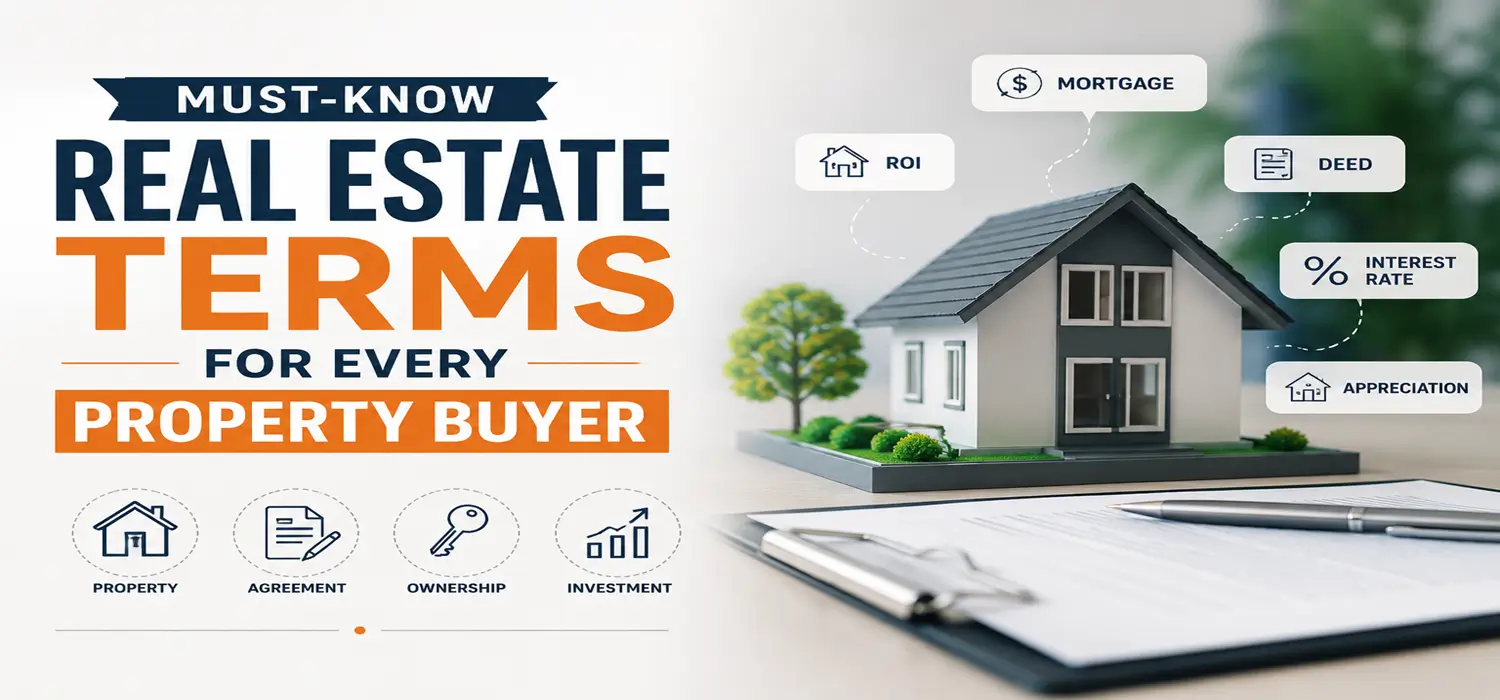
Top Real Estate Terms Every Buyer & Investor Should Know

Top Real Estate Terms Every Buyer & Investor Should Know

Dubai’s stunning skyline reflects the fast-growing and dynamic nature of its property market. However, for many first-time buyers and sellers, the real estate terminology used in the UAE can feel confusing and overwhelming. From purchasing a property and applying for a mortgage to investing in off-plan projects, understanding the most commonly used real estate terms can make the entire process smoother and more confident.

If you are planning to enter Dubai’s real estate market, building a strong understanding of property-related vocabulary is an essential first step.

Why Is It Important to Understand Real Estate Terms in the UAE?

Having a clear understanding of UAE real estate terminology is essential for making informed and secure decisions in Dubai’s competitive property market. Regulatory authorities and systems such as the Dubai Land Department (DLD), the Real Estate Regulatory Agency (RERA), Ejari, and Oqood play a major role in shaping the country’s property framework, creating a real estate environment that is unique to the UAE.

Dubai’s property market also includes different ownership models that can sometimes confuse first-time investors. For instance, freehold ownership allows buyers to own both the property and the land with full legal rights, whereas leasehold ownership generally provides rights to use the property for a fixed period, commonly up to 99 years.

In addition, terms such as Built-Up Area (BUA) and saleable area are extremely important because they directly influence property pricing, valuation, and purchasing decisions. Understanding these concepts can help buyers compare properties more accurately and avoid confusion during transactions.

Dubai continues to attract both local and international investors due to its strong rental returns, modern infrastructure, and growing real estate opportunities. However, knowing the key real estate terms, rules, and legal procedures can give buyers and investors a significant advantage in the market. Even experienced property investors may face challenges without proper knowledge of the industry terminology.

At Luxury Spaces, we simplify the most important real estate terms you should know before entering Dubai’s exciting property market. Our goal is to help you understand the language of real estate with clarity and confidence.

Key Regulatory Bodies and Systems in Dubai Real Estate

Before exploring common real estate terms, it is important for buyers, investors and property owners to understand the major authorities and systems that regulate Dubai’s real estate sector. These organisations help maintain transparency, legal compliance and investor confidence across the market.

Dubai Land Department

The Dubai Land Department, commonly known as DLD, is the primary authority responsible for managing and regulating all real estate activities in Dubai. It plays a major role in creating a secure and organised property environment for local and international investors.

DLD oversees property registrations, records real estate transactions, issues title deeds and supports investment activities across the emirate. The department also works to improve transparency and strengthen trust within Dubai’s property market.

Real Estate Regulatory Agency

The Real Estate Regulatory Agency, also known as RERA, functions under the Dubai Land Department and serves as the regulatory body for Dubai’s real estate industry.

RERA develops regulations and policies designed to attract foreign investment while ensuring fair practices within the sector. Its responsibilities include licensing real estate brokers and agencies, monitoring developers’ escrow accounts, overseeing owners’ associations and regulating real estate advertising activities.

For property buyers and sellers, RERA has introduced several important legal agreements, including:

  • Form A – Agreement between the seller and listing agent

  • Form B – Agreement between the buyer and agent

  • Form F – Official agreement between buyer and seller

These forms help create clear and legally structured property transactions.

Rental Disputes Centre

The Rental Disputes Centre (RDC) specialises in handling conflicts between landlords and tenants in Dubai.

The centre provides legal support and dispute resolution services for issues such as rental disagreements, eviction notices, rent increases and interruptions to property services. RDC plays an important role in protecting the rights of both tenants and property owners.

Trakheesi and Real Estate Licensing

Trakheesi is an online platform managed by DLD that simplifies property-related procedures through digital services. The system is mainly used for managing permits and licences within Dubai’s real estate industry.

Any company or individual advertising a property in Dubai must first obtain a valid Trakheesi permit before publishing advertisements. This process helps reduce misleading promotions and duplicate property listings while ensuring that all real estate transactions comply with legal regulations.

Makani and Al Sa’fat Systems

The Makani system, which means “my location,” assigns a unique 10-digit identification number to every building and public location in Dubai. This smart navigation system improves location accuracy and accessibility across the city.

Meanwhile, Al Sa’fat is Dubai’s sustainable building rating system introduced in 2016 under the approval of Mohammed bin Rashid Al Maktoum. The initiative encourages environmentally friendly construction and sustainable urban development.

Under Al Sa’fat regulations, all newly constructed buildings must achieve at least the Silver Sa’fa certification. Developers can also target higher ratings, including Golden and Platinum Sa’fa, by meeting additional sustainability standards.

Must-Know Real Estate Terms for Every Property Buyer

Whether you are planning to buy a home or invest in property for the future, understanding common real estate terms can make the entire process smoother and more transparent. Knowing these important concepts helps buyers make informed decisions and communicate confidently with agents, lenders, and property sellers.

Below are some essential real estate terms that every first-time buyer and beginner property investor should understand.

Equity

Equity refers to the actual financial value you own in a property after deducting any outstanding liabilities, such as a mortgage or loan. Since property prices and loan balances change over time, the equity in a home also keeps changing.

For example, when you make regular mortgage payments or your property value increases, your equity grows accordingly. Higher equity can also improve your financial standing when refinancing or selling the property.

Buyer’s Agent

A buyer’s agent, also known as a selling agent, is a licensed real estate professional who represents the interests of the property buyer throughout the transaction process.

Their key responsibilities generally include:

  • Searching for suitable properties based on the buyer’s needs

  • Negotiating the best possible price on behalf of the client

  • Assisting with documentation and the overall sales process

  • Protecting the buyer’s interests during the transaction

A skilled buyer’s agent can help simplify the property-buying journey and ensure better value for the investment.

Escrow Account

An escrow account is a secure account used to hold funds for a specific purpose until certain conditions are fulfilled. In real estate transactions, lenders commonly use escrow accounts to collect and manage property-related expenses such as taxes and insurance payments.

This system helps ensure that important payments are made on time and reduces financial risks for both the buyer and lender.

Land Lease

In a standard property purchase, buyers typically own both the building and the land it stands on. However, in some cases, properties are sold under a land lease arrangement.

Under a land lease agreement, the buyer owns the property structure but pays recurring rent to the landowner for the use of the land. It is important to carefully review lease terms before investing in such properties.

Appraisals

A real estate appraisal is a professional assessment used to estimate a property’s current market value. Licensed appraisers usually evaluate the property by comparing it with recently sold properties of similar size, condition, and location.

The appraisal process may also consider renovations, upgrades, and the overall condition of the property. Appraisals play an important role in mortgage approvals and property pricing.

Market Value

Market value refers to the estimated price a property is likely to achieve in an open and competitive market. Several factors influence market value, including location, demand, property condition, amenities, and recent comparable sales.

Although there is no fixed formula for calculating market value, real estate professionals often use appraisals and nearby property sales data to determine a fair market value (FMV).

Return on Investment (ROI)

Return on Investment, commonly known as ROI, is a key metric used to measure the profitability of a property investment. It compares the income or profit generated from a property against the total investment cost.

For instance, if a property owner earns rental income from an apartment, the percentage earned in comparison to the overall investment amount is considered the ROI. A higher ROI generally indicates a more profitable investment opportunity.

For Sale By Owner (FSBO)

A property listed as “For Sale By Owner” (FSBO) means the owner is selling the property directly without hiring a real estate agent.

One major advantage for sellers is saving on agent commission fees. However, FSBO transactions may require buyers and sellers to handle negotiations, paperwork, and legal procedures independently. Buyers should conduct proper due diligence before proceeding with direct-owner purchases.

Closing

Closing is the final step in a real estate transaction where the ownership of the property is officially transferred from the seller to the buyer.

During the closing process, all legal documents are signed, pending payments are completed, and the transaction becomes legally binding. The agreed closing date marks the official completion of the property sale.

Closing Costs

Closing costs are additional charges that buyers and sellers must pay when finalizing a property transaction. In the UAE, these expenses may include:

  • Property registration fees

  • Real estate agency charges

  • Mortgage registration fees

  • Administrative and processing fees

  • Land department charges

Typically, closing costs can range between 5% and 7% of the total property value, depending on the transaction type and financing structure.

Commission

Real estate agents usually charge a commission fee for their services in helping sellers find buyers and complete property transactions successfully.

The commission amount is generally calculated as a percentage of the property’s selling price. In the UAE real estate market, this fee commonly ranges between 5% and 6% of the total property value, depending on the agreement between the seller and the agent.

Understanding Different Types of Property Ownership

Property ownership is one of the most important concepts in Dubai’s real estate market. The type of ownership you choose directly affects your legal rights, investment control, and long-term benefits as a property owner.

Whether you are purchasing a home for personal use or investment purposes, understanding these ownership structures can help you make informed decisions in Dubai’s property market.

Below is a detailed overview of the major property ownership types every buyer and renter should know.

Freehold vs Leasehold Property Ownership

Dubai offers two primary forms of property ownership — freehold and leasehold. Each comes with different rights and responsibilities for buyers.

Freehold Ownership in Dubai

Freehold ownership gives buyers complete ownership rights over both the property and the land it is built on. Property owners have full authority to sell, lease, occupy, or transfer the property at their convenience.

Once the transaction is completed, the buyer’s name is officially registered with the Dubai Land Department as the legal owner. The owner also receives a title deed, which serves as permanent proof of ownership. Additionally, freehold properties can be inherited by legal heirs.

Leasehold Ownership in Dubai

Leasehold ownership allows buyers to use and occupy a property for a fixed period, generally up to 99 years. However, the land itself remains under the ownership of the freeholder.

After the lease duration expires, ownership rights return to the original landowner unless the lease agreement is renewed or extended.

Key Differences Between Freehold and Leasehold Properties

  • Freehold owners enjoy complete control over renovations and structural modifications.

  • Leasehold property holders usually require written approval from the freeholder before making major changes.

  • Freehold properties can be passed on to heirs through inheritance.

  • Leasehold contracts must be officially registered through Dubai’s Ejari system.

  • Foreign nationals can only purchase freehold properties in designated freehold zones approved by the Dubai government.

What Are Non-Freehold Areas in Dubai?

Non-freehold areas are residential or commercial zones where property ownership is restricted to UAE and GCC nationals.

In these locations, expatriates and foreign investors are generally not permitted to purchase property ownership rights. These regulations are part of Dubai’s property ownership framework and help define where international investors can buy real estate.

Musataha Agreements and Lease Durations

A Musataha agreement is a specialised real estate arrangement that grants an individual or company the right to develop or use another person’s land for a specific period.

Under Dubai Decree No. 23 of 2022, Musataha rights for commercial land may initially be granted for up to 35 years, with the possibility of extension up to a maximum of 50 years.

During the agreement period, the Musataha holder has ownership rights over the structures or developments built on the land. Construction work must typically be completed within five years from the date of registration.

This type of agreement creates a flexible option that falls between traditional freehold ownership and standard leasehold arrangements.

What Is an Off-Plan Property?

An off-plan property refers to real estate that is purchased before construction has been completed, or in some cases, before construction has even started.

Buying off-plan property in Dubai means investors purchase directly from the developer at an early stage of the project.

Off-plan projects are highly popular because they often come with attractive pricing, flexible payment plans, and strong future investment potential. For developers, off-plan sales help generate market interest and increase project demand before completion.

For buyers, these properties can provide opportunities to secure premium units at lower prices compared to ready properties.

Important Legal and Financial Terms for Property Buyers

Understanding legal and financial terminology is essential when purchasing property in Dubai. Buyers should familiarise themselves with the key contracts and official documents involved in the transaction process.

Here are some of the most important real estate terms every property buyer should know.

SPA (Sales and Purchase Agreement)

The Sales and Purchase Agreement, commonly known as SPA, is one of the most important documents in a real estate transaction.

This legally binding contract outlines all agreed terms between the buyer and seller, including:

  • Property details

  • Purchase price

  • Payment structure

  • Handover timeline

  • Terms and obligations of both parties

In Dubai’s real estate market, transactions for new developments often begin with preliminary agreements or memorandums before the final SPA is prepared by the seller’s legal representative.

The SPA protects both parties by clearly defining responsibilities, reducing the risk of disputes, and ensuring smoother financing and ownership transfer processes.

MOU (Memorandum of Understanding)

The Memorandum of Understanding, also known as Form F, is a RERA-approved document commonly used during property transactions in Dubai.

Prepared by the real estate agent, the MOU includes the agreed terms and conditions between the buyer and seller. Both parties are required to sign this document before proceeding further.

As part of the process, the buyer usually submits a 10% security deposit to the Registration Trustee. Once signed, the MOU generally remains valid for 30 days, during which all necessary paperwork and formalities must be completed.

Understanding the distinction between an MOU and a Sales Agreement is important, as both documents serve different purposes during the transaction process.

POA (Power of Attorney)

A Power of Attorney, or POA, authorises another individual to legally represent someone during property-related transactions.

This document is especially useful for overseas investors or property owners who are unable to be physically present in Dubai during the buying or selling process.

For legal acceptance, the POA must be prepared in both English and Arabic and notarised by a recognised public notary. If the document is issued outside the UAE, it must also go through UAE embassy legalisation procedures before it becomes valid in Dubai.

Title Deeds in Dubai

A title deed is the official legal document issued by the Dubai Land Department that confirms property ownership.

Once all transaction formalities are completed, the title deed is transferred into the buyer’s name, officially recognising them as the legal property owner.

The title deed includes essential property details such as:

  • Plot number

  • Title deed number

  • Date of issue

  • Property type

  • Building number

  • Mortgage information

  • Property size

  • Purchase value

Ready properties are issued a title deed immediately after ownership transfer. In the case of off-plan properties, buyers initially receive an Oqood certificate, which is later converted into a title deed after project completion.

Since title deeds serve as legal proof of ownership, they are considered one of the most important documents in Dubai’s property buying process.

Escrow Accounts and Completion Bonds

When purchasing an off-plan property in the UAE, buyer payments are deposited into regulated escrow accounts to ensure financial security. These accounts are monitored by the Dubai Land Department (DLD) and the Real Estate Regulatory Agency (RERA), helping safeguard investors’ funds throughout the construction process. Developers are only permitted to withdraw money after completing approved construction stages. Under Law No. 8 of 2007, developers must also retain 5% of the project’s total value in the escrow account for one year after the property registration is completed.

Home Insurance

Home insurance plays an essential role when buying a property in the UAE. It is designed to protect homeowners against financial losses caused by events such as theft, fire, natural disasters, or accidental damage. Choosing suitable home insurance coverage is important, as it ensures your property and belongings remain protected while reducing potential financial risks in the future.

No Objection Certificate (NOC)

A No Objection Certificate (NOC) is an important legal document used during property transactions in the UAE. It confirms that the developer has no objection to the sale or transfer of ownership to a new buyer. In most cases, developers issue the NOC only after verifying that all service fees, utility charges, and outstanding payments related to the property have been fully cleared.

Practical Real Estate Glossary UAE

Apart from legal procedures, understanding practical real estate terminology is equally important when buying, selling, or renting property in the UAE. These commonly used terms can directly influence your property decisions and overall market experience.

BUA and Saleable Area

Built-Up Area (BUA) refers to the total constructed area of a property, including all covered sections such as bedrooms, living spaces, walls, staircases, balconies, and terraces.

On the other hand, the Saleable Area represents the usable area that buyers actually own. Unlike BUA, it excludes shared or common spaces such as corridors, elevators, foyers, and common staircases.

Ejari and Oqood Systems

Ejari, which translates to “my rent” in Arabic, is Dubai’s official tenancy registration system introduced by RERA. It legalises rental agreements and ensures that tenancy contracts are properly documented. Registering through Ejari is also necessary for accessing services like DEWA connections and visa sponsorship for dependents.

Oqood is a system specifically developed for off-plan property transactions. Managed by the Dubai Land Department, it allows developers and buyers to register property ownership before the final title deed is issued, creating a more transparent and secure transaction process.

You can also explore the major differences between Oqood registration and title deeds to better understand property ownership procedures in the UAE.

Post-Handover Payment Plans

Post-handover payment plans provide buyers with the flexibility to continue paying for a property even after receiving possession. These plans typically divide payments into pre-handover and post-handover phases using structures such as 30/70, 50/50, or 60/40 payment ratios. In many cases, developers offer these plans over a period of 3 to 5 years without charging interest.

Snags and Furnished vs Unfurnished Properties

Snags refer to defects or unfinished work found in newly constructed properties before the final handover. Identifying these issues early allows buyers to request repairs from the developer at no additional cost.

Furnished properties come equipped with essential furniture and household amenities, making them ready for immediate occupancy. Unfurnished homes, however, may exclude items such as kitchen appliances or furniture. While furnished properties generally come with higher rental costs, they can help tenants avoid the upfront expense of buying furnishings separately.

Gated Communities and Short-Term Rentals

Gated communities are residential developments designed with controlled entry points, security systems, and 24/7 surveillance to offer residents greater privacy and safety. Popular gated communities in Dubai include Emirates Hills, Arabian Ranches, and Palm Jumeirah.

Short-term rentals, often referred to as holiday homes, are regulated by the Department of Economy and Tourism rather than Ejari. These furnished properties require special approvals and must comply with standards related to hygiene, security, maintenance, and insurance coverage.

Real Estate Terms to Know for Renting a Property

What Are the Most Common Real Estate Terms in the UAE for Tenants?

Whether you are planning to rent out a property or live as a tenant in the UAE, understanding these frequently used real estate terms can make the rental process easier and more transparent.

Tenancy Contract or Lease Contract

Before moving into a rental property, both the landlord and tenant must sign a tenancy contract or lease agreement. This legally binding document outlines the responsibilities, rights, and obligations of both parties for a specified rental period. In Dubai, tenancy contracts often include clauses regarding maintenance responsibilities, service payments, and property usage guidelines.

Rental Yields

Rental yield refers to the return generated from a property through rental income and is commonly used interchangeably with ROI (Return on Investment). For example, if apartments in Business Bay achieve rental yields of 8%, it means investors are earning an average annual return of 8% on their property investment.

Lease

A lease is a formal agreement that allows a tenant, also known as a lessee, to use a property for a fixed duration in exchange for regular rental payments made to the property owner.

Lessee and Lessor

In rental agreements, the tenant renting the property is called the lessee, while the property owner or landlord granting the lease is known as the lessor.

Lease Agent

A lease agent is a licensed real estate professional responsible for managing rental transactions, marketing properties for lease, and completing lease agreements on behalf of landlords or property owners.

Security Deposit

A security deposit is a refundable amount paid by the tenant to the landlord before moving into a property. In the UAE, it is usually around 5% of the annual rent. This deposit acts as financial protection against property damage or unpaid dues during the tenancy period. The amount is generally refunded once the tenant vacates the property in good condition and clears all outstanding bills.

Rent to Own

For buyers who cannot immediately afford the full purchase price of a property or qualify for a mortgage, rent-to-own schemes provide an alternative option. Under this arrangement, the buyer rents the property for a fixed period while retaining the option to purchase it before the lease agreement expires.

In the UAE, rent-to-own programs usually involve additional charges. For example, in Dubai, buyers may need to pay fees such as 2% of the property’s sale value, title deed charges, and other administrative costs before entering into the agreement.

Essential Real Estate Terms You Should Know Before Applying for a Mortgage

Mortgage and Pre-Approval

A mortgage pre-approval is an initial confirmation issued by a bank that indicates how much money you may be eligible to borrow for purchasing a property. It also reflects your qualification for a home loan based on your financial profile. In most cases, banks provide this response within 3 to 5 working days. However, it is important to understand that pre-approval is not a final or legally binding commitment.

To qualify for a mortgage in Dubai, applicants are generally required to be at least 21 years old, have a stable source of income and maintain a healthy credit history.

A mortgage, also referred to as a home loan, is a financial agreement used either to buy a property or borrow funds against an existing property’s value. Under this agreement, the lender has legal rights over the property until the borrower fully repays the loan amount along with applicable interest. If the borrower fails to meet repayment obligations, the lender may take possession of the property.

Whether you are planning to secure a mortgage for yourself or assisting a client through the process, understanding the following real estate terms is extremely important.

Down Payment in Real Estate

A down payment is the upfront amount a buyer pays to the lender while purchasing a property such as a townhouse, villa or apartment. Typically, this payment ranges between 5% and 20% of the total property price and is usually paid from personal savings.

For example, if someone says, “Ahmed made a 20% down payment on his villa,” it means he paid 20% of the property value in advance before financing the remaining amount through a mortgage.

Mortgage Interest

Mortgage interest refers to the cost charged by a lender for providing a home loan. It is calculated as a percentage of the total borrowed amount. Depending on the loan type, the interest rate may either remain fixed for a specific period or fluctuate over time.

Fixed-Rate Mortgage

A fixed-rate mortgage comes with an interest rate that remains unchanged for a set duration. In Dubai, this fixed period commonly ranges from one to five years.

Once the fixed term ends, the interest rate may increase based on the bank’s standard lending rate or the prevailing EIBOR rate. Many borrowers prefer fixed-rate mortgages because they offer predictable monthly payments and protection from sudden interest rate increases during the fixed period.

Variable-Rate Mortgage

In a variable-rate mortgage, the interest rate changes according to market conditions and inflation trends. These rates are often linked to the one-month, three-month or six-month EIBOR.

This type of mortgage is commonly chosen by buyers looking for long-term financing, as it may help them avoid the higher renewal rates that sometimes apply after fixed-rate periods expire.

Default

A borrower is considered in default when they fail to make mortgage payments on time or repeatedly miss scheduled repayments. Loan default can result in financial penalties and, in serious cases, legal action by the lender.

Mortgage Broker

The mortgage process can often feel complicated, especially for first-time buyers. This is where a mortgage broker becomes valuable.

A mortgage broker acts as an intermediary between the borrower and the bank. Their role is to help clients compare loan options, handle paperwork and arrange suitable financing solutions for purchasing property.

Conventional Mortgage

In a conventional mortgage, the borrower repays both the loan amount and the interest charged by the bank. The interest serves as the lender’s profit for providing the funds.

This is one of the most widely used mortgage structures across global real estate markets.

Islamic Mortgage

Islamic mortgages are designed according to Sharia principles and are highly popular in the UAE.

Under Islamic law, charging interest on loans is prohibited. Instead of earning profit through interest, Islamic banks generally purchase the property on behalf of the customer and then lease or sell it back through an agreed payment structure. This approach provides halal financing options while remaining compliant with Islamic financial guidelines.

EIBOR (Emirates Interbank Offered Rate)

The Emirates Interbank Offered Rate, commonly known as EIBOR, is the benchmark interest rate at which banks in the UAE lend money to one another.

EIBOR plays a major role in determining mortgage interest rates in the country. Since these rates fluctuate daily, buyers, investors and property sellers often monitor them closely. Updated EIBOR rates can be checked through the official website of the UAE Central Bank.

Other Important Real Estate Terms

Apart from mortgage-related terminology, there are several additional real estate expressions commonly used in property listings and discussions.

Art Deco

Art Deco is a design style that first appeared in France during the 1920s before gaining popularity across Europe and the United States in the 1930s.

This architectural and interior style is recognised for its luxurious and dramatic appearance. Common Art Deco elements include geometric patterns, polished metal finishes, mirrored décor, layered lighting and glossy surfaces. Materials such as chrome, brass, wood and decorative glass are often used to create an elegant and sophisticated look.

Interestingly, Art Deco is not limited to buildings or interiors. Decorative items like clocks, furniture and lighting fixtures can also feature this iconic design style.

En-Suite

An en-suite refers to a bedroom that has direct access to an attached bathroom. This layout offers added convenience and privacy, making it a highly desirable feature in residential properties.

In real estate listings, an en-suite bedroom is often considered a premium selling point.

Pergola

A pergola is an outdoor architectural structure commonly installed in gardens, patios or relaxation areas. It usually consists of vertical pillars supporting cross-beams and an open roof framework.

In Dubai, pergolas are especially popular in beachside villas and outdoor seating spaces, often enhanced with flowing fabric curtains for additional shade and comfort.

A pergola should not be confused with an arbour. While both are outdoor structures, an arbour typically includes built-in seating within the design.

Amenities

Amenities are the extra features and facilities that increase a property’s comfort, convenience and value.

When a property listing mentions “excellent amenities,” it may include facilities such as swimming pools, landscaped gardens, gyms, barbeque areas, children’s play zones or covered parking spaces.

Properties with premium amenities generally attract higher buyer and tenant interest.

Pied-à-Terre

The term pied-à-terre originates from French and refers to a small secondary residence owned or rented in addition to a person’s main home.

These properties are often used occasionally for relaxation, business visits or short stays. Typically, pied-à-terre homes are owned by individuals who can afford an additional private living space away from their primary residence.

FAQs

1. What are the most common real estate terms beginners should know?

Some common real estate terms include ROI, mortgage, down payment, appreciation, freehold property, leasehold property, and property valuation. Understanding these terms helps buyers and investors make informed decisions.

2. Why is it important to understand real estate terminology?

Understanding real estate terminology helps buyers, sellers, and investors avoid confusion, compare property deals effectively, and make smarter investment decisions.

3. What does ROI mean in real estate?

ROI (Return on Investment) measures the profit earned from a property investment compared to its total cost. It helps investors evaluate the profitability of a property.

4. What is the difference between freehold and leasehold property?

A freehold property gives the buyer complete ownership of the property and land, while a leasehold property provides ownership rights for a limited period under a lease agreement.

5. What is a mortgage in real estate?

A mortgage is a loan taken from a bank or financial institution to purchase a property. The property acts as security until the loan is fully repaid.

6. How can beginners learn real estate terms easily?

Beginners can learn real estate terms through online guides, property blogs, real estate courses, and industry glossaries that explain terminology in simple language.


CategoriesBlog

Dubai Property Visa 2026: Complete Guide to 2, 5 & 10-Year Residency Options

Dubai Property Visa 2026: Complete Guide to 2, 5 & 10-Year Residency Options

Imagine finding the perfect property in Dubai—strong rental potential, a prime location, and long-term value—only to pause at one critical question: which residency visa do you actually qualify for? Many investors face this exact confusion. With multiple visa options tied to property ownership, the differences between durations, investment thresholds, and eligibility rules can quickly become overwhelming.

Dubai continues to attract global investors in 2026 for good reason. The city offers a tax-efficient environment, consistently high rental yields, world-class infrastructure, and policies designed to support expats and long-term residents. This combination has positioned Dubai as one of the most reliable real estate markets for both lifestyle buyers and serious investors.

For property investors, residency is no longer a secondary benefit—it’s a strategic advantage. Depending on your investment level, you can qualify for a 2-year investor visa, a 5-year residency option, or the prestigious 10-year Golden Visa.

Dubai has recently relaxed the eligibility criteria for its two-year property-linked residency visa. Although there hasn’t been an official public announcement, the updated details have surfaced through the Cube Center—an organization connected with the Dubai Land Department (DLD) that focuses on investor services within the real estate sector.

These changes reflect Dubai’s broader strategy to create a more flexible regulatory environment, attract a wider pool of investors, and strengthen its competitive position in the global property market. Below is a clear overview of the latest property-based residency visa options, as outlined by the DLD.

Dubai Property Visa Options at a Glance (2026)

Visa TypeMinimum InvestmentDurationKey Benefit
2-Year Investor VisaAED 750,000RenewableEntry-level residency with flexibility
5-Year Property VisaAED 2 millionMedium-termGreater stability + family sponsorship
10-Year Golden VisaAED 2 million+Long-termPremium residency with full independence

1) Two-Year Property Investor Visa (Entry-Level Option)

Dubai has made it easier for investors to qualify for the two-year real estate residency visa, especially for first-time or smaller investors.

Key Updates:

  • The minimum property value requirement has been removed for sole property owners

  • A new eligibility rule has been introduced for joint ownership cases

Requirements:

Sole Ownership:

  • No minimum property value is required

Joint Ownership:

  • Each investor must contribute a minimum of Dh400,000

  • Applies when ownership is equally divided between partners

Previously, sole property owners were required to invest at least Dh750,000, but this condition has now been eliminated (if the property is fully owned).

Purpose:

  • To make property investment more accessible

  • To encourage broader participation in Dubai’s real estate market

2) Five-Year Retirement Visa (Property-Based Route)

This visa option is tailored for retirees who wish to settle in the UAE for the long term. Property investment is one of the main qualifying pathways, alongside savings or stable income.

Requirements:

  • Minimum property investment of Dh1 million

  • Financial savings of at least Dh1 million

  • Applicant must be 55 years or older

Validity:

  • Valid for five years and can be renewed

Additional Note:

To apply through Dubai, applicants must demonstrate a minimum annual income of Dh240,000 or an equivalent amount in foreign currency. This income can be earned either within the UAE or from overseas sources.

3) 10-Year Golden Visa (Property Investor Route)

The Golden Visa continues to be the most preferred option among investors, offering long-term residency along with maximum flexibility and security.

Investment Requirement:

  • Minimum investment of Dh2 million

  • Can be a single property or a combination of multiple properties reaching this value

Eligible Property Types:

  • Completed (ready) properties

  • Off-plan properties

  • Mortgaged properties (subject to specific conditions)

Validity:

  • Issued for 10 years and renewable

Key Benefits:

  • No requirement for a local sponsor or employer

  • No minimum stay requirement — the visa remains valid even if you stay outside the UAE for more than six months

  • Ability to sponsor family members, including spouse and children (regardless of age), as well as domestic workers (up to three)

How to Apply for a Dubai Property Visa

Securing a Dubai property visa follows a structured process, but with the right preparation, it can be completed smoothly within a few weeks. The first step is to purchase a qualifying property that meets the minimum investment threshold for your chosen visa category. Ensure the property is in a designated freehold area and complies with current eligibility rules.

Once the transaction is completed, you must obtain the title deed, which serves as official proof of ownership. This document is issued by the Dubai Land Department and is essential for initiating your visa application.

Next, you can apply for the residency visa through the Dubai Land Department or relevant immigration authorities. At this stage, you’ll need to prepare and submit key documents, including your passport, title deed, and recent bank statements to demonstrate financial standing.

After document submission, applicants are required to complete a medical fitness test and apply for an Emirates ID, which acts as your official identification in the UAE. These steps are mandatory for all residency visas.

Finally, once approvals are in place, your visa is stamped, granting you legal residency linked to your property investment. In most cases, the entire process takes approximately 2 to 6 weeks, depending on documentation and approvals.

Common Mistakes Investors Make

One of the most frequent mistakes investors make is purchasing a property below the minimum visa threshold, assuming they can still qualify for residency. In reality, Dubai’s property-linked visa requirements are strict, and even a small shortfall in value can lead to rejection.

Another critical error is not verifying the developer’s credibility. Dubai has many reputable developers, but overlooking due diligence—such as project history, delivery timelines, and approvals—can expose investors to delays or non-qualifying properties.

Many buyers also ignore mortgage eligibility rules. While financing is allowed in certain cases, not all mortgaged properties meet visa criteria. Failing to understand bank approvals or loan-to-value conditions can complicate or delay your application.

Lastly, a common misconception is that all properties qualify for residency visas. Only specific freehold properties that meet government regulations are eligible. Off-plan units, for example, may have different conditions depending on approval status.

Avoiding these mistakes requires a clear understanding of current rules and careful planning—ensuring your investment not only delivers returns but also secures your residency without complications.

Conclusion

Choosing the right Dubai property visa ultimately depends on your investment goals, budget, and long-term plans. The 2-year investor visa is ideal for entry-level buyers looking to step into Dubai’s real estate market with flexibility. The 5-year residency option offers greater stability and suits mid-level investors aiming for consistent rental income and family security. Meanwhile, the 10-year Golden Visa stands out as the most attractive choice for serious investors seeking long-term residency, independence, and premium lifestyle benefits.

Dubai continues to strengthen its position as a global real estate powerhouse in 2026, backed by investor-friendly policies, tax advantages, and strong market performance. Whether you’re investing for capital appreciation, passive income, or residency security, the city offers a clear pathway to achieve all three.

FAQs

1. What is the Dubai Property Visa in 2026?

The Dubai Property Visa allows foreign investors to obtain UAE residency by purchasing property in Dubai. In 2026, options include 2-year, 5-year, and 10-year visas based on property value and eligibility criteria.

2. What is the minimum investment for a Dubai property visa?

To qualify for a Dubai property visa, the minimum investment typically starts from AED 750,000 for a 2-year visa, while higher investments (AED 2 million or more) may qualify for long-term or Golden Visa options.

3. Can I get a 10-year UAE Golden Visa through property investment?

Yes, investors can apply for a 10-year UAE Golden Visa if they invest at least AED 2 million in eligible real estate in Dubai, subject to government regulations and approval.

4. Is the Dubai property visa renewable?

Yes, all Dubai property visas (2, 5, and 10 years) are renewable as long as the investor continues to meet the eligibility criteria, including property ownership requirements.

5. Can I sponsor my family with a Dubai property visa?

Yes, property visa holders can sponsor their spouse, children, and sometimes parents, depending on the visa type and income requirements.

6. Does a Dubai property visa allow me to work in the UAE?

A property visa grants residency but does not automatically allow employment. To work in the UAE, you may need a separate work permit or employer sponsorship.

CategoriesBlog

Loan Against Property in Dubai 2026: Eligibility, Rates & Process Guide

Loan Against Property in Dubai 2026: Eligibility, Rates & Process Guide

Dubai’s financial landscape in 2026 is evolving at a pace that continues to attract global investors, entrepreneurs, and high-net-worth individuals. With strong real estate growth, investor-friendly regulations, and a tax-efficient environment, the city has positioned itself as a hub where property is not just a place to live—but a powerful financial asset. As property values rise across key communities, more owners are exploring ways to unlock liquidity without selling their assets.

This is where a loan against property in Dubai (2026) becomes highly relevant. In simple terms, it allows property owners to leverage the value of their real estate to secure funds for various needs—whether for business expansion, personal investments, or managing financial commitments. Unlike traditional financing, this approach enables borrowers to retain ownership while accessing substantial capital.

The increasing popularity of mortgage loan Dubai solutions reflects a broader shift toward smarter financial planning. Expats, investors, and business owners are now actively using Dubai property financing options to maximize asset efficiency. With property prices trending upward, the borrowing potential tied to real estate is also increasing—making this an opportune time to consider structured financing strategies backed by property.

A loan against property in Dubai gives property owners the ability to access funds by leveraging the value of their real estate—without needing to sell it. As Dubai’s property market remains stable and lending frameworks continue to evolve in 2026, this financing option stands out as a reliable solution for both residents and investors seeking liquidity.

In this guide, you’ll understand:

What is a Loan Against Property (LAP)?

A loan against property (LAP) in Dubai is a secured form of borrowing where an owned property is used as collateral to obtain funds from a bank or financial institution. Instead of financing a new purchase, you are utilizing the equity built in an existing asset.

This type of loan is widely used for purposes such as renovating a home, expanding a business, consolidating debts, or financing new investments. Unlike standard home loans, LAP is generally offered on properties that are either fully owned or have a significant portion of the loan already repaid.

To better understand how LAP differs from other financing methods, it helps to compare it with various mortgage types in Dubai—since LAP is designed for liquidity access rather than property acquisition.

Eligibility Criteria for Loan Against Property in Dubai

Before approving a loan against property in Dubai, lenders assess several criteria, including your residency status, financial strength, and the condition of the property.

Residency Status

Eligibility varies depending on whether you are a resident or non-resident:

  • UAE Nationals are usually eligible for higher loan-to-value (LTV) ratios, often reaching up to 85%, along with simpler documentation processes.

  • Expat residents can typically secure up to 80% LTV, depending on the bank and the property’s profile.

  • Non-residents face stricter conditions, with LTV limits generally around 60% and additional paperwork requirements.

These differences are based on risk assessment policies followed by financial institutions in the UAE.

Income and Financial Requirements

Banks carefully evaluate your ability to repay the loan. Common benchmarks in 2026 include:

  • A minimum monthly income of approximately AED 20,000 for salaried individuals and AED 35,000 for self-employed applicants (this may vary by lender).

  • A strong credit profile with a low debt-to-income ratio.

  • Age limits requiring loan repayment by around 65 years for salaried individuals and 70 years for self-employed borrowers.

Maintaining a stable financial profile can significantly improve your chances of loan approval.

Property Eligibility

The property itself is a key factor when applying for a loan against property in Dubai:

  • The property should be fully paid or have substantial equity built up.

  • A valid title deed and proper registration are essential.

  • Properties located in prime areas or well-maintained communities tend to receive higher valuations.

Location has a direct impact on valuation, as property trends across Dubai highlight differences in demand and performance between various neighbourhoods.

Documentation

The required documents vary based on employment type:

  • Salaried applicants must provide a passport, visa, Emirates ID, salary certificate, and recent bank statements.

  • Self-employed individuals need to submit a trade license, audited financial statements, and company bank statements.

  • A credit bureau report is generally required for all applicants.

Preparing all necessary documents in advance can help speed up the loan approval process and avoid unnecessary delays.

Loan-to-Value (LTV) Ratio and Maximum Borrowing Limits

The loan-to-value (LTV) ratio defines the percentage of your property’s value that a lender is willing to finance.

  • UAE nationals: Up to 85%
  • Expats: Up to 80%
  • Non-residents: Approximately 60%

For properties priced above AED 5 million or when financing a second property, the LTV ratio generally decreases to around 60%–75%.

The final loan amount is also influenced by the type and quality of the property. For example, individuals using high-end assets such as apartments for sale in Dubai or luxury villas for sale in Dubai as collateral may secure better valuations, which can positively impact their borrowing capacity.

Interest Rates and Charges (2026 Overview)

Interest rates for loans against property in Dubai vary depending on market trends, the borrower’s financial profile, and the selected interest structure.

Interest Rate Structures

Financial institutions in the UAE commonly provide the following options:

  • Fixed interest rates for an initial period (usually 1 to 5 years), followed by a variable rate

  • Variable rates linked to EIBOR (Emirates Interbank Offered Rate) plus a bank-specific margin

  • Islamic financing solutions, where profit rates replace conventional interest

Current Interest Rate Ranges (2026)

Borrower TypeFixed Rate Range (2026)Variable Rate (EIBOR + Margin)
UAE Nationals≈ 3.79% – 3.99%EIBOR + 1.50% to 1.89%
Expats/Residents≈ 3.89% – 4.50%EIBOR + 1.79% to 1.99%
Non-residents≈ 4.19% – 6.50%EIBOR + 2.00% to 2.50%

Additional Fees and Costs

Apart from interest rates, there are several other expenses borrowers need to account for:

  • Processing fees: Typically between 0.25% and 1% of the total loan amount
  • Property valuation charges: Around AED 2,500 to AED 3,500
  • Mortgage registration fee: Approximately 0.25% of the loan value
  • Insurance requirements: Both life and property insurance are mandatory

Including these costs in your financial planning is essential to avoid unexpected expenses during the loan process.

Loan Application and Approval Process in Dubai

Applying for a loan against property in Dubai follows a systematic procedure and usually takes a few weeks from start to finish.

Step-by-Step Process

  1. Evaluate eligibility and seek pre-approval (if available)

  2. Submit all necessary documentation

  3. Property evaluation by an authorised valuer

  4. Credit assessment and underwriting

  5. Issuance and signing of the loan offer

  6. Registration with the Dubai Land Department and release of funds

Using analytical tools like Property Finder’s Data Guru can help you assess property values and market trends beforehand, allowing you to better understand your borrowing potential.

Timeline for Approval

Applicant TypeEstimated Timeframe
Salaried individuals / UAE Nationals3–5 weeks
Self-employed / Expats4–6 weeks
With pre-approval1–2 weeks (initial stage)

Partnering with a Property Finder SuperAgent can further streamline the process. These certified professionals offer expert guidance, assist with documentation, and help compare lenders to secure the most suitable deal.

How to Improve Loan Against Property Terms & Eligibility in Dubai

Getting favorable terms on a loan against property in Dubai largely depends on how well you prepare and position your finances.

  • Consider opting for a salary transfer arrangement, as it can help you secure lower interest rates
  • Keep your credit score healthy and try to minimise any existing debts or liabilities
  • Invest in properties located in high-demand areas to achieve a better valuation
  • Choose fixed interest rates when market conditions are stable or advantageous
  • Always compare offers from multiple lenders before making a final decision

Even minor improvements in your financial standing can significantly increase your borrowing capacity and help you obtain more competitive interest rates.

Conclusion

A loan against property in Dubai serves as a versatile financing solution, enabling property owners to unlock funds without selling their real estate assets. UAE nationals generally enjoy higher loan-to-value (LTV) ratios, whereas expats and non-residents are subject to slightly stricter requirements.

As of 2026, interest rates remain competitive, with both fixed and variable rate options available. The loan approval process usually takes around 4 to 6 weeks. With proper financial planning and preparation, borrowers can secure more favorable loan terms and maximise their funding potential.

FAQs

1. What is a loan against property in Dubai?

A loan against property in Dubai is a secured loan where you pledge your residential or commercial property to get funds from banks or financial institutions.

2. Who is eligible for a loan against property in Dubai?

Eligibility depends on factors like age, income, employment status, property value, and credit history. Both UAE residents and non-residents can apply, subject to lender policies.

3. What interest rates are offered for property-backed loans in Dubai?

Interest rates for loans against property in Dubai typically vary based on the lender, loan tenure, and applicant profile, usually ranging between competitive market rates.

4. How much loan can I get against my property in Dubai?

Most lenders offer up to 50%–70% of the property’s market value, depending on the type of property and your financial profile.

5. What documents are required to apply?

Common documents include Emirates ID, passport, income proof, bank statements, and property ownership documents.

6. How long does the loan approval process take in Dubai?

The approval process usually takes between 5 to 15 working days, depending on the lender and document verification.

Demo Title

Demo Description


Introducing your First Popup.
Customize text and design to perfectly suit your needs and preferences.

This will close in 20 seconds

[field id="field_2f7c340"]

This will close in 20 seconds