

CategoriesBlog
CategoriesBlog
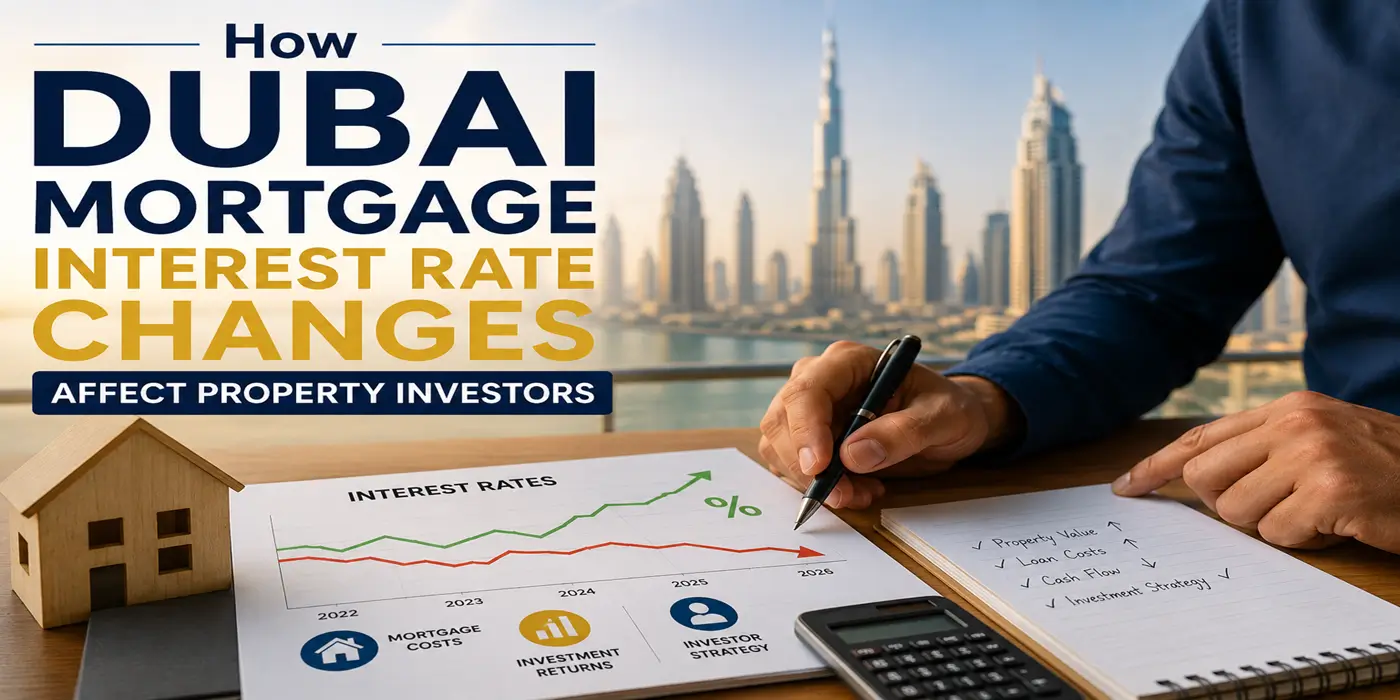
How Dubai Mortgage Interest Rate Changes Affect Property Investors
By Naveed Bashir,
How Dubai Mortgage Interest Rate Changes Affect Property Investors
Many homebuyers in Dubai concentrate on finding the right property before thinking about financing. However, overlooking mortgage trends can be a costly mistake. Even a minor change in interest rates can significantly affect monthly repayments, loan eligibility, and the overall cost of homeownership.
Understanding how interest rate fluctuations impact Dubai mortgage rates is essential for making informed property decisions. Mortgage pricing in the UAE is influenced by several factors, including EIBOR, policies set by the UAE Central Bank, banking sector liquidity, and global financial conditions linked to the US dollar. In this guide, we explain what drives mortgage rate movements, how different buyers are affected, and the practical steps borrowers should consider in 2026 instead of simply waiting for rates to decline.
What Determines Mortgage Rates in Dubai?
Mortgage rates in Dubai are not set arbitrarily. Financial institutions rely on key economic indicators and then adjust their offerings based on an applicant’s financial profile and the level of lending risk involved.
UAE Central Bank Policy
The UAE dirham is pegged to the US dollar, which means the UAE Central Bank often aligns its monetary policy with decisions made by the US Federal Reserve. As a result, when US interest rates rise, borrowing costs in the UAE generally increase as well.
In early 2026, the UAE Central Bank kept its base rate at 3.65% after the Federal Reserve paused further rate increases. This provided some stability for lenders and borrowers following an extended period of aggressive monetary tightening.
EIBOR Benchmark
The Emirates Interbank Offered Rate (EIBOR) plays a major role in determining variable mortgage rates in Dubai. Many adjustable-rate home loans are directly linked to this benchmark, meaning any increase in EIBOR can lead to higher monthly mortgage payments during the next interest rate reset period.
Many buyers pay little attention to this factor during the mortgage approval process. However, when repayment amounts increase a few months later, what initially appeared to be an affordable loan can become considerably more expensive.
Bank-Specific Factors
In addition to market benchmarks, individual banks assess the risk associated with each borrower before offering a mortgage rate. For example, a salaried resident employed by a well-established multinational company may qualify for more favourable terms than a self-employed investor or a non-resident buyer.
Banks typically evaluate several factors when determining mortgage pricing, including:
Debt-to-income ratio
Employment and employer category
Credit history and financial profile
Type and location of the property
Residency status
Size of the down payment
Mortgage experts often advise buyers to look beyond the advertised interest rate when comparing loan options. Additional expenses such as processing fees, insurance costs, and early settlement charges can significantly increase the total cost of borrowing over the life of the mortgage.
What Are Interest Rates and Why Do They Change?
Interest rates play a major role in the cost of borrowing money, including home loans and mortgages. They generally increase when inflation remains high or when central banks aim to reduce spending and control economic growth. On the other hand, rates tend to decline when inflation eases or when governments and financial authorities want to stimulate economic activity.
While the concept sounds straightforward, the factors influencing interest rates are often more complex.
In the UAE, interest rate movements are closely linked to the US monetary policy because the UAE dirham is pegged to the US dollar. As a result, even though Dubai’s property market remained resilient, mortgage rates increased alongside the US Federal Reserve’s tightening cycle. This created uncertainty for many first-time homebuyers during 2023 and 2024, as borrowing costs rose despite strong real estate demand.
Why Do Interest Rates Increase?
Interest rates typically rise when central banks take steps to control inflation or reduce excessive borrowing. As funding costs increase, banks adjust their mortgage rates, leading to higher borrowing expenses for homebuyers.
Even a small increase can have a significant financial impact. For instance, someone planning to finance a property with an AED 1.5 million mortgage might assume that a 1% rate hike is negligible. In reality, that increase can substantially raise monthly repayments and may even reduce the total loan amount a bank is willing to approve.
Higher interest rates can result in:
Increased monthly mortgage payments
Reduced borrowing capacity
Stricter lending requirements
Greater affordability challenges for first-time buyers
A stronger competitive position for cash purchasers
This clearly demonstrates how changes in interest rates directly influence Dubai mortgage rates. While buyers may still be interested in the same property, higher monthly commitments can make the investment less financially comfortable.
Why Do Interest Rates Decrease?
Interest rates generally fall when inflation slows or when policymakers want to encourage economic growth by making borrowing more affordable. In response, banks may lower mortgage rates, although these reductions do not always happen immediately or at the same pace.
For property buyers, lower interest rates can provide several advantages. Monthly mortgage payments may become more affordable, loan approval prospects can improve, and buyers often gain greater flexibility within their budgets. Investors may also benefit, as lower financing costs can increase rental yields and improve overall investment returns.
For both homeowners and investors, falling interest rates can create favourable opportunities to enter the Dubai real estate market or refinance existing mortgages under better terms.
How Rising Interest Rates Impact Dubai Mortgage Rates
Rising interest rates can significantly affect the cost of buying a home in Dubai. While the property’s value and features remain the same, the amount buyers pay each month through mortgage instalments increases. As borrowing costs rise, many homebuyers adjust their budgets, often shifting from larger properties to more affordable options to secure financing. In many cases, higher interest rates influence not only monthly payments but also overall purchasing decisions and market demand.
Higher Monthly Mortgage Payments
One of the most immediate effects of rising interest rates is the increase in monthly mortgage repayments.
A home loan with a lower interest rate is far more affordable than one with a higher rate. Even a small percentage increase can make a noticeable difference, especially for larger loan amounts. For example, a buyer purchasing a property worth AED 2 million could end up paying significantly more each month without receiving any additional benefits or property upgrades.
Reduced Borrowing Capacity
Higher interest rates can also limit the amount buyers are eligible to borrow.
Financial institutions assess affordability based on income and repayment capacity. As interest rates increase, monthly repayment obligations grow, reducing the total loan amount a borrower may qualify for. As a result, some buyers who could previously afford a villa may now need to consider a townhouse or apartment instead.
Lower Property Affordability
Increasing mortgage rates often reduce overall property affordability, particularly for buyers who rely on financing.
This trend tends to impact the mid-market housing segment first, where mortgages play a major role in purchasing decisions. While luxury property buyers who pay in cash may continue investing, financed buyers often take more time to evaluate options and negotiate better deals.
Greater Demand for Cash Purchases
In a rising interest rate environment, cash buyers often gain a competitive advantage.
Property sellers generally prefer transactions with fewer financing risks and quicker completion timelines. Since mortgage approvals may become stricter and take longer during periods of higher rates, cash buyers can often secure deals more easily and with greater confidence.
Increased Interest in Mortgage Refinancing
As borrowing costs rise, many homeowners look for ways to manage their existing loans more effectively.
Refinancing allows borrowers to review and potentially improve the terms of their mortgage, depending on market conditions and lender offerings. This is one of the reasons why searches for mortgage refinancing options in Dubai often increase following periods of substantial interest rate hikes, as homeowners seek to reduce financial pressure and improve long-term affordability.
How Falling Interest Rates Benefit Buyers
Falling interest rates create new opportunities for both homebuyers and real estate investors. Lower borrowing costs improve affordability, increase purchasing power, and can lead to better returns on investment.
Even during periods of global financial uncertainty, Dubai’s property market has remained resilient. The city recorded AED 252 billion in real estate transactions during the first quarter of 2026, reflecting strong buyer confidence and sustained demand. As financing conditions improve, more buyers are expected to return to the market, particularly for off-plan developments where flexible payment options become even more attractive.
Lower Monthly Mortgage Payments
One of the most noticeable advantages of lower interest rates is the reduction in monthly mortgage payments.
A slight decrease in borrowing costs can significantly lower a buyer’s financial commitment each month. For many families, this improvement in affordability can make the difference between postponing a purchase and moving forward with confidence.
In Dubai’s competitive property market, lower monthly payments may also allow buyers to upgrade from a smaller home to a larger property or invest in a well-established community with stronger long-term growth potential.
Higher Loan Eligibility
Reduced mortgage rates often increase a buyer’s borrowing capacity.
Since lower interest costs decrease the overall repayment burden, banks may be willing to approve larger loan amounts. This gives buyers greater flexibility when exploring their options.
For example, someone initially considering a mid-market neighbourhood may now have the opportunity to purchase property in premium locations such as Downtown Dubai, Dubai Hills Estate, or sought-after waterfront communities that previously exceeded their budget.
This demonstrates that changes in interest rates can influence Dubai mortgage affordability in more ways than simply lowering monthly repayments.
Increased Demand for Properties
Lower financing costs typically encourage greater activity across the real estate market.
Many buyers who delayed purchasing during periods of higher interest rates return once borrowing becomes more affordable. Investors also become more active as financing expenses decrease, while developers often introduce new projects to meet growing demand.
Dubai’s property sector has experienced similar trends in previous market cycles, with lower interest rates generally supporting higher transaction volumes and faster sales in the ready property segment.
Better Returns for Property Investors
For investors, financing costs play a crucial role in determining overall profitability.
When mortgage expenses decrease, rental income can generate stronger net returns, making investment properties more financially rewarding. This advantage is especially evident in established rental communities where tenant demand and occupancy levels remain high.
However, successful investors look beyond interest rates alone. They also evaluate factors such as vacancy levels, maintenance costs, service charges, rental demand, future capital appreciation, and the property’s resale potential before making investment decisions.
Opportunity to Refinance Existing Mortgages
A declining interest rate environment also creates opportunities for existing homeowners and investors to refinance their mortgages.
Borrowers who secured a loan during a high-interest period may benefit from switching to a more competitive mortgage product. Refinancing can help reduce monthly payments, lower the total interest paid over the life of the loan, or provide more favourable repayment terms.
For property investors, even a modest reduction in interest rates can improve cash flow and protect long-term rental income. While the savings may appear small in the short term, they can become substantial over a 15- or 20-year mortgage period.
However, refinancing should be approached carefully. A lower advertised interest rate does not always guarantee better overall value. Buyers should evaluate the complete cost of refinancing, including:
Early mortgage settlement fees
New bank processing charges
Property valuation costs
Insurance adjustments
Fixed-rate period conditions
Interest rates applicable after the promotional period ends
Comparing the total long-term cost of a new mortgage against the existing loan is often more beneficial than focusing solely on the headline interest rate. A well-informed refinancing decision can deliver meaningful savings while supporting long-term financial goals.
Fixed vs Variable Mortgage Rates in Dubai: Which Option Is Better?
Fixed vs. Variable When comparing fixed and variable mortgage rates in Dubai, there is no universal choice that fits every homebuyer. The right option largely depends on your financial goals, market expectations, and comfort with risk.
A fixed-rate mortgage is a popular choice for buyers who prefer predictable monthly repayments over a set period. It provides financial stability and protection against unexpected interest rate increases. On the other hand, a variable-rate mortgage may appeal to buyers who anticipate a decline in interest rates and are willing to accept fluctuations in their monthly payments.
Both mortgage options have their advantages and potential drawbacks.
Some buyers lock in fixed rates for long periods when interest rates are at their peak, which could limit future savings if rates fall. Others choose variable rates too soon, hoping for lower costs, only to face higher repayments if market conditions change. These are common mistakes that can affect long-term affordability.
How a 1% Interest Rate Increase Affects Your Mortgage
A 1% increase in mortgage interest rates may seem insignificant at first, but it can have a noticeable impact on your monthly budget. For example, on a home loan of AED 1.5 million, a 1% rise in the interest rate can increase your monthly repayment by nearly AED 900.
While the property itself remains the same, the cost of financing it becomes considerably higher. This is why it is essential to evaluate mortgage costs carefully before committing to a property purchase, rather than making a decision based purely on emotions.
Loan Amount | Interest Rate | Estimated Monthly Payment |
|---|---|---|
AED 1.5 Million | 4.50% | AED 8,335 |
AED 1.5 Million | 5.50% | AED 9,211 |
The difference in monthly repayments can quickly impact your purchasing power and overall affordability.
Using a Dubai mortgage payment calculator before selecting a property can help you set realistic expectations, compare financing options, and avoid stretching your budget beyond comfortable limits. Careful planning ensures that you choose a mortgage solution that aligns with your long-term financial objectives.
Impact on Different Types of Property Buyers
Changes in interest rates affect every buyer differently, depending on their financial goals and borrowing capacity. A first-time homebuyer, for example, may struggle with higher monthly repayments, while an investor focuses on whether rental income can still generate healthy returns. Luxury property buyers typically have greater financial flexibility, allowing them to navigate market fluctuations with ease. Meanwhile, non-resident buyers often deal with stricter lending requirements and higher borrowing costs, making interest rate changes an important factor in their purchasing decisions.
First-Time Buyers
First-time buyers are often the most sensitive to rising interest rates because they depend heavily on mortgage financing. Even a small increase in borrowing costs can reduce their loan eligibility and increase monthly repayments, making it more challenging to purchase their preferred property.
Investors
For property investors, financing costs play a key role in determining profitability. They carefully compare mortgage expenses with expected rental income and overall yields. When interest rates rise significantly, investment returns may decline, prompting some buyers to reassess their strategies.
Luxury Buyers
Luxury property buyers are generally less affected by interest rate fluctuations, as many rely on larger down payments or alternative funding sources. With greater financial flexibility, they are more likely to negotiate favourable deals rather than rush into a purchase.
Non-Resident Buyers
International and non-resident buyers often face more stringent lending criteria than local purchasers. They may also encounter higher interest rates and lower loan-to-value ratios, making financing conditions an important consideration when investing in the property market.
UAE Interest Rate Trends: A Historical Analysis
The UAE mortgage market has experienced significant changes over the past few years, largely influenced by global economic conditions and local banking policies. During 2020 and 2021, low interest rates made home financing more affordable, encouraging property purchases and investment across the country.
However, the landscape shifted in 2022 as global central banks introduced aggressive rate hikes to combat inflation. As a result, UAE mortgage rates increased, and borrowers with variable-rate loans experienced noticeable rises in their monthly repayments due to fluctuations in EIBOR.
By 2025 and 2026, market conditions began to stabilise. Although interest rates remained higher than the ultra-low levels seen during the pandemic, lenders gradually became more competitive, particularly for borrowers with strong financial profiles and stable incomes.
Interest Rate Trends at a Glance
2020–2021: Low borrowing costs supported strong demand for residential and investment properties across the UAE.
2022–2024: Global monetary tightening led to a sharp increase in mortgage rates and financing costs throughout the country.
2025–2026: The market entered a more balanced phase, with increased competition among banks and improved financing options for qualified borrowers
How Interest Rate Changes Impact Dubai Mortgage Rates and Property Prices
Interest rate movements play an important role in Dubai’s real estate market, particularly for buyers who rely on financing.
When borrowing costs rise, financed buyers often become more cautious, reducing overall demand and encouraging tougher price negotiations. Higher mortgage payments can also affect affordability, leading some buyers to postpone purchasing decisions.
On the other hand, lower interest rates typically stimulate market activity by making home loans more accessible. Combined with Dubai’s growing population, strong investor confidence, and expanding economy, reduced financing costs can support higher transaction volumes.
However, mortgage rates are only one factor influencing property values. Other key elements include:
- The timing of new property supply.
- The reputation and track record of developers.
- Rental demand across different communities.
- Overall economic and population growth.
These factors work together to shape the direction of Dubai’s property market.
Best Strategies for Buyers During Rising Interest Rates
Purchasing property during periods of higher interest rates requires careful financial planning. Buyers can reduce risk and improve long-term affordability by following several practical strategies.
Secure a Fixed Interest Rate
If predictable monthly payments are a priority, choosing a fixed-rate mortgage can provide protection against future rate increases.
Increase Your Down Payment
A larger upfront payment reduces the loan amount, lowers monthly instalments, and may help secure more favourable lending terms.
Strengthen Your Credit Profile
Maintaining a good credit score and stable financial history can improve eligibility for competitive mortgage rates.
Compare Multiple Mortgage Providers
Rather than accepting the first offer, buyers should evaluate financing options from several banks and lenders to find the best overall package.
Focus on High-Demand Properties
Properties located in areas with strong rental demand often provide better long-term investment potential and income stability.
Consider Future Refinancing Opportunities
If interest rates decline over time, refinancing your mortgage could help reduce borrowing costs and monthly payments.
A practical approach is to assess affordability under different scenarios. If a small increase in interest rates would significantly impact your finances, reconsidering the budget may be a wise decision.
Refinancing Your Mortgage in Dubai
Mortgage refinancing can be a smart financial strategy when the long-term savings exceed the costs associated with switching lenders.
Before refinancing, borrowers should carefully evaluate several factors, including:
Early settlement charges.
Mortgage processing fees.
Updated insurance requirements.
Property valuation expenses.
Interest rate reset conditions.
It is also important to look beyond attractive promotional rates. Some lenders offer lower initial rates but offset these with additional fees or less favourable long-term terms. Reviewing the complete financing package helps avoid unexpected costs.

CategoriesBlog
Best Areas in Dubai for Family Apartments (Safe & Affordable)
By Naveed Bashir,
Best Areas in Dubai for Family Apartments (Safe & Affordable)
Dubai is home to a wide range of residential communities that cater to the needs of modern families. From well-planned neighbourhoods to luxury waterfront developments, the city offers plenty of choices for those searching for a comfortable place to call home. Before making a move, it is important to explore the best family-friendly apartment communities in Dubai and compare the amenities they provide.
Families often prioritise locations that offer easy access to schools, healthcare facilities, supermarkets, parks and recreational spaces. Fortunately, Dubai has several communities designed to support a convenient and family-oriented lifestyle. To make your search easier, we have highlighted some of the most popular areas for family apartments in Dubai.
Most Popular Areas for Family Apartments in Dubai
Based on current market trends, Jumeirah Village Circle (JVC) remains one of the top choices for families seeking apartments in Dubai. Other highly sought-after locations include Dubai Marina, Business Bay, Downtown Dubai and Jumeirah Lake Towers (JLT), each offering unique advantages for residents.
Jumeirah Village Circle (JVC)
Jumeirah Village Circle, commonly known as JVC, has become one of Dubai’s preferred residential destinations for families. The community provides a balanced lifestyle with modern conveniences, green spaces and a wide range of everyday facilities. Its family-friendly environment and excellent infrastructure make it one of the best places to rent an apartment in Dubai.
JVC offers residents access to quality schools, nurseries, supermarkets, fitness centres, parks and dining options. The community is also home to Circle Mall, a popular shopping and entertainment destination that provides a variety of retail outlets, restaurants and leisure activities for families.
Many apartment buildings in JVC are specifically designed with families in mind and feature amenities such as swimming pools, children’s play areas, landscaped gardens and fitness facilities.
- Popular Communities: District 10, District 11, District 13, District 14, District 15
- Hotels: FIVE Jumeirah Village Hotel Milano by Giovanni Boutique Suites
- Supermarkets: Holiday Minimart Bluemart Supermarket Choithrams
- Nurseries and Schools: Kids World Nursery Little Wonders Nursery Ladybird Early Learning Centre JSS International School
- Shopping Destination: Circle Mall
Apartment Rental and Sale Prices in JVC
The average rental and sales prices for apartments in JVC are as follows:
| Apartment Type | Average Annual Rent | Average Sale Price |
|---|---|---|
| Studio | AED 54,000 | AED 697,000 |
| 1-Bedroom | AED 79,000 | AED 1,137,000 |
| 2-Bedroom | AED 114,000 | AED 1,691,000 |
| 3-Bedroom | AED 158,000 | AED 2,529,000 |
Dubai Marina
Dubai Marina is another excellent choice for families looking for premium apartment living in Dubai. Famous for its stunning waterfront setting, modern skyscrapers and luxurious residential towers, the community offers a vibrant lifestyle with world-class amenities.
One of Dubai Marina’s biggest advantages is its strategic location, providing quick access to major business districts, beaches and popular attractions across the city. Families can enjoy a combination of upscale living, leisure activities and convenient transport links.
The area features a variety of family-friendly apartments along with parks, walking trails, restaurants and entertainment venues, making it a desirable residential destination.
- Popular Communities and Residential Towers: Marina Diamonds Marina Gate Elite Residence Escan Marina Tower Princess Tower
- Hotels: The Address Dubai Marina Rove Dubai Marina Le Verda Suites & Villas Grosvenor House
- Supermarkets: Spinneys West Zone Supermarket Carrefour Market Al Maya, Waitrose
- Nurseries and Schools: Blossom Nursery Raffles Nursery Monroe’s Nursery Jebel Ali Village Nursery Horizon International School Dubai British School King’s School Dubai
- Shopping Destination: Dubai Marina Mall
Dubai Marina continues to attract families who value luxury living, waterfront views and convenient access to essential amenities, making it one of the most desirable family-friendly apartment communities in the city.
Rental and Sales Trends for Apartments
The latest rental and property price trends for family-friendly apartments in Dubai Marina are outlined below, providing a clear overview for both investors and homebuyers.
| Apartment Type | Average Annual Rent | Average Sale Price |
|---|---|---|
| Studio | AED 71,000 | AED 1,230,000 |
| 1-Bedroom | AED 101,000 | AED 1,806,000 |
| 2-Bedroom | AED 154,000 | AED 2,896,000 |
| 3-Bedroom | AED 246,000 | AED 4,778,000 |
BUSINESS BAY
Business Bay is one of Dubai’s most dynamic mixed-use communities, known for its modern skyline and picturesque views of the Dubai Canal. Although it has long been a preferred destination for professionals, the area has also become a popular choice for families looking for a vibrant urban lifestyle. With a wide range of residential developments and excellent amenities, Business Bay offers some of the best family apartments in Dubai.
The neighbourhood is particularly attractive for those working in Business Bay or nearby districts, thanks to its strategic location and easy connectivity. At the same time, families benefit from quality schools, retail outlets, healthcare facilities, and leisure attractions, making it a well-rounded place to call home.
Popular Residential Communities and Buildings
Aykon City
Peninsula
Executive Towers
DAMAC Towers by Paramount
Al Habtoor City
Well-Known Hotels
JW Marriott Marquis Hotel
Radisson Blu Hotel Waterfront
Taj Dubai
DoubleTree by Hilton Dubai Business Bay
Supermarkets
West Zone Supermarket
Al Maya Supermarket
Nurseries and Schools
Families living in Business Bay have access to reputable educational institutions, including:
Hummingbird Nursery
Maple Bear Pre School
Dubai International School
JSS Private School
Shopping Destination
Bay Avenue Mall
Rental and Sales Trends for Apartments
Business Bay caters to a variety of budgets and lifestyle preferences, with numerous options available for both renters and property buyers.
Apartment Type | Average Annual Rent | Average Sale Price |
|---|---|---|
Studio | AED 71,000 | AED 1,162,000 |
1-Bedroom | AED 102,000 | AED 1,862,000 |
2-Bedroom | AED 147,000 | AED 2,800,000 |
3-Bedroom | AED 206,000 | AED 5,000,000 |
These pricing trends highlight Business Bay’s strong appeal among families, professionals, and investors seeking premium apartments in one of Dubai’s most sought-after communities.
DOWNTOWN DUBAI
Downtown Dubai is one of the most sought-after family-friendly neighbourhoods in the city. Best known for the world-famous Burj Khalifa, this vibrant district offers a wide selection of modern apartments, along with luxury penthouses and branded serviced residences in premium towers. The community is also home to Dubai Mall, one of the largest shopping and entertainment destinations globally, making everyday living convenient for residents.
Popular Residential Buildings
Burj Khalifa
Old Town
Opera District
Forte
The Residences
Hotels
Armani Hotel
Palace Downtown
Kempinski The Boulevard
Supermarkets
Spinneys
Waitrose
Carrefour
Grandiose Supermarket
Nurseries and Schools
Toddler Town British Nursery
Blossom Nursery
JSS Private School
Shopping and Entertainment
Dubai Mall
Souk Al Bahar
Apartment Rental and Sale Prices
Apartment Type | Average Annual Rent | Average Sale Price |
|---|---|---|
Studio | AED 79,000 | AED 1,409,000 |
1 Bedroom | AED 130,000 | AED 2,469,000 |
2 Bedroom | AED 221,000 | AED 4,574,000 |
3 Bedroom | AED 358,000 | AED 8,334,000 |
JUMEIRAH LAKE TOWERS (JLT)
Jumeirah Lake Towers (JLT) is another excellent choice for families looking for apartment living in Dubai. This well-planned waterfront community features high-rise residential towers surrounded by picturesque lakes and landscaped walkways. Its strategic location near Sheikh Zayed Road (E11) provides residents with easy access to major business districts and lifestyle destinations, making it a practical option for family living.
Popular Residential Communities
JLT Cluster A
JLT Cluster B
JLT Cluster Q
Gold Views Seven City
JLT Cluster L
Supermarkets
Almaya Supermarket
Freshmart Supermarket
In N Out Supermarket
Carrefour Hypermarket
Nurseries and Schools
Dewdrops Nursery
Learning Ladders Nursery
Paddington Nursery
Kid Kare Nursery
Kings School Al Barsha
American School of Dubai
Nearby Shopping Destination
Dubai Marina Mall
Apartment Rental and Sale Prices
The following table highlights the average rental and property prices for apartments in JLT:
Apartment Type | Average Annual Rent | Average Sale Price |
|---|---|---|
Studio | AED 64,000 | AED 856,000 |
1 Bedroom | AED 91,000 | AED 1,477,000 |
2 Bedroom | AED 144,000 | AED 2,585,000 |
3 Bedroom | AED 190,000 | AED 3,759,000 |
JLT continues to attract families and investors alike due to its balanced lifestyle, quality amenities, and competitive property prices compared to other prime residential areas in Dubai.
FAQs
What are the best areas in Dubai for family apartments?
Some of the best areas include Dubai Marina, Jumeirah Village Circle (JVC), Arabian Ranches, and Downtown Dubai due to their family-friendly environment and amenities.Which Dubai neighborhoods are most suitable for families?
Neighborhoods with parks, schools, healthcare facilities, and low crime rates such as Mirdif, Al Barsha, and JVC are ideal for families.Is Dubai a good place for families to live?
Yes, Dubai offers a safe environment, quality education, modern infrastructure, and numerous recreational options for families.What is the average rent for family apartments in Dubai?
The rent varies depending on location, but affordable areas like JVC and International City offer budget-friendly options, while Downtown Dubai is more premium.Which area in Dubai is best for affordable family apartments?
Jumeirah Village Circle (JVC), Al Nahda, and International City are known for affordable family housing options.Are there family-friendly apartments near schools in Dubai?
Yes, areas like Al Barsha, Mirdif, and Dubai Silicon Oasis have easy access to reputed schools and nurseries.What amenities should families look for in Dubai apartments?
Families should look for security, nearby schools, parks, supermarkets, healthcare facilities, and easy transportation access.Which Dubai areas are popular among expat families?
Dubai Marina, JVC, Arabian Ranches, and Palm Jumeirah are popular among expat families due to lifestyle and community facilities.

CategoriesBlog
Dubai Real Estate vs Stock Market in 2026: Where Should You Invest for Higher Returns?
By Naveed Bashir,
Dubai Real Estate vs Stock Market in 2026: Where Should You Invest for Higher Returns?
Choosing between Dubai real estate and the stock market in 2026 involves much more than comparing potential returns. Smart investors also consider factors such as risk levels, liquidity, income generation, investment horizon, and capital protection before making a decision. The goal is not simply to identify the investment with the highest returns but to find an option that aligns with financial objectives while offering stability and control over invested capital.
With global economic uncertainty, inflation concerns, and changing interest rate trends, the debate between Dubai real estate and stock market investments has become increasingly relevant. Investors are carefully evaluating whether tangible assets like property or highly liquid financial markets provide better opportunities for long-term wealth creation.
The right choice ultimately depends on an investor’s priorities. Those seeking consistent rental income and long-term capital appreciation may find Dubai’s property market more attractive. On the other hand, investors who value flexibility, quick transactions, and short-term market opportunities may prefer stocks. Understanding the strengths of each asset class can help investors make informed financial decisions in 2026.
Complete Guide to Understanding the Two Investment Options
What is Dubai Real Estate Investment?
Dubai real estate investment involves purchasing physical properties such as apartments, three and four-bedroom residences, villas, townhouses, plots of land, office spaces, retail units, and other commercial or residential assets. Investors typically generate returns through rental income, long-term property appreciation, or a combination of both.
Dubai’s property market remains a popular investment destination due to several attractive factors. The absence of annual property tax, strong demand from expatriates and international buyers, and the continuous development of new residential communities create favorable conditions for investors.
Another major advantage of property investment is the level of control it provides. Investors can carefully select the property’s location, developer, unit type, view, tenant profile, and even the ideal time to sell. This flexibility allows long-term investors to build and preserve wealth while managing their investment strategy according to market conditions.
What is Stock Market Investment?
Stock market investing involves purchasing shares of publicly listed companies or investment funds. Investors can benefit from dividend payments as well as capital gains when share prices increase. Stocks are highly liquid assets, making it easy to buy or sell investments whenever market conditions change.
One of the biggest attractions of the stock market is its potential for significant returns. However, this opportunity often comes with higher volatility and risk. Stock prices are influenced by a wide range of factors, including economic conditions, company performance, global events, interest rates, and overall investor sentiment.
Successful stock market investing often requires careful research, regular monitoring, and the ability to manage short-term market fluctuations while maintaining a long-term investment strategy.
Dubai Real Estate Market in 2026
Dubai’s property market continues to attract both local and international investors in 2026. The sector has demonstrated strong resilience and consistent growth despite economic uncertainties affecting many global markets. During the first quarter of the year, Dubai recorded property transactions worth approximately $68.6 billion, with overall transaction values increasing by 31%. These figures reflect sustained investor confidence and the city’s growing appeal as a global real estate destination.
The market’s performance highlights Dubai’s ability to attract long-term capital while offering diverse investment opportunities across residential, commercial, and mixed-use developments.
Key Advantages of Investing in Dubai Real Estate
Dubai’s property sector offers several compelling benefits for investors looking to diversify their portfolios and generate stable returns.
Steady Rental Income
Residential and commercial properties can provide a reliable source of recurring income, particularly in high-demand locations with strong occupancy rates.
Long-Term Capital Appreciation
Properties located in established neighborhoods and emerging growth areas have the potential to increase in value over time, helping investors build long-term wealth.
No Annual Property Tax
One of Dubai’s most significant investment advantages is the absence of annual property tax, allowing investors to retain a larger portion of their returns compared to many international property markets.
Tangible Asset Ownership
Unlike financial securities, real estate is a physical asset that many investors consider more secure during periods of market uncertainty. Property ownership can provide greater confidence and long-term financial stability.
As a result, Dubai real estate is often an attractive option for investors seeking asset-backed growth, passive income opportunities, and protection against market volatility, rather than relying solely on daily fluctuations in financial markets.
Key Challenges
The stock market is known for its frequent ups and downs, with prices influenced by factors such as corporate earnings, economic conditions, geopolitical developments, interest rate changes, and overall investor confidence. Sudden market fluctuations can create uncertainty, especially for inexperienced investors. Many retail participants tend to react emotionally during periods of volatility, making impulsive buying or selling decisions that can impact long-term returns. To manage these risks effectively, investors should follow a well-defined investment strategy, maintain proper portfolio diversification, use appropriate position sizing, and establish clear entry and exit plans.
Real Estate vs Stock Market – A Side-by-Side Comparison
When comparing Dubai real estate with the stock market, it is important to evaluate key factors such as ownership, income potential, liquidity, risk exposure, control, and overall investment objectives. The table below highlights the main differences between these two popular asset classes.
| Factor | Dubai Real Estate | Stock Market |
|---|---|---|
| Ownership | Direct ownership of a tangible property asset. | Ownership of shares in a company or investment fund. |
| Income Potential | Generates rental income and the possibility of long-term property appreciation. | May provide dividend income along with capital gains, depending on market performance. |
| Liquidity | Selling a property generally takes more time and involves additional procedures. | Stocks can usually be bought or sold quickly during market hours. |
| Risk Profile | Influenced by property location, developer reputation, tenant demand, and market cycles. | Affected by market volatility, economic conditions, and changing investor sentiment. |
| Investor Control | Investors have greater control over property selection, management, and improvement decisions. | Shareholders have limited influence over a company’s day-to-day operations and management decisions. |
| Best Suited For | Investors seeking steady income, asset security, and long-term wealth preservation. | Those looking for growth opportunities, higher liquidity, and portfolio diversification. |
This comparison highlights a simple reality: real estate is often the preferred choice for investors seeking long-term control and a steady income stream, while stocks are better suited for those who prioritize liquidity and the ability to move capital quickly.
ROI Comparison – Which Investment Delivers Better Returns?
There is no one-size-fits-all answer. The potential return on investment depends on factors such as investment duration, risk appetite, and financial goals. When comparing real estate investment with the stock market, properties can generate income through rental earnings and capital appreciation, whereas stocks typically offer returns through share price growth and dividend payouts.
Real Estate ROI
Dubai’s real estate market provides multiple opportunities for wealth creation. Investors can benefit from rental income, property value appreciation, and protection against inflation. One of the biggest advantages of property ownership is that rental payments from tenants can help cover long-term ownership costs, while the physical asset itself offers a level of capital security.
That said, actual returns vary based on several factors, including the purchase price, property location, maintenance and service charges, occupancy rates, and market demand at the time of resale. For this reason, investors should focus on calculating the net rental yield rather than relying solely on advertised returns.
Stock Market ROI
The stock market has the potential to deliver attractive returns, particularly during periods of strong economic performance. For example, the Dubai Financial Market (DFM) reported a 43% increase in profit, reflecting improved trading activity and stronger investor participation. Such market performance strengthens the appeal of equities for investors looking for growth opportunities. More details can be found in the DFM Q1 2026 net profit update.
However, stock market gains can be unpredictable. A profitable investment may quickly lose value if market conditions or investor sentiment change. As a result, successful stock investing requires careful research, patience, and a disciplined approach to risk management.
Risk Analysis – Which Investment Is Safer in 2026?
The definition of a “safe investment” differs from one investor to another. Some individuals value stable and predictable income, while others prefer investments that can be converted into cash quickly. Many also consider emotional comfort and financial stability when assessing investment risk.
Real Estate Risks
Property investments come with certain challenges, including limited liquidity, potential construction delays, fluctuating resale demand, vacancies, and changing market conditions. Despite these risks, choosing properties in prime locations with strong rental demand and securing appropriate financing can significantly reduce potential downsides. Real estate is particularly suitable for investors who are comfortable holding their assets over the long term.
Stock Market Risks
Stock market investing carries risks such as price volatility, market corrections, company-specific issues, and the impact of global economic events. While the ability to buy and sell shares quickly is a major advantage, it can also encourage emotional decisions, such as panic selling during market downturns. Having a clear investment strategy and sticking to it is essential for long-term success.
Liquidity Comparison – Which Asset Is Easier to Buy and Sell?
When it comes to liquidity, stocks have a clear advantage. Investors can purchase or sell shares during trading hours through a brokerage account, making it easy to access funds whenever needed. This flexibility is particularly attractive for those who require quick access to capital.
Real estate transactions, on the other hand, take more time. In Dubai, selling a property can typically take between 30 and 60 days, depending on factors such as pricing, location, buyer interest, mortgage conditions, and the transfer process. Although this slower pace may seem like a disadvantage, it can help investors avoid impulsive decisions and encourage a more disciplined, long-term investment approach. For many property investors, this stability becomes a valuable benefit.
REITs – A Smart Balance Between Real Estate and Stock Investments
What Are REITs?
Real Estate Investment Trusts (REITs) provide an easy way for investors to gain exposure to the property market without purchasing physical real estate. These investment vehicles own and manage income-producing properties and distribute a significant portion of their earnings to investors.
In simple terms, REITs combine some of the advantages of real estate ownership with the convenience and accessibility of stock market investing. They allow individuals to benefit from the real estate sector without the responsibilities of buying or managing property.
Benefits of Investing in REITs
REITs can be an attractive option for investors looking for affordable entry into the real estate market while maintaining flexibility. Unlike direct property ownership, they offer greater liquidity since many REITs are publicly traded and can be bought or sold with relative ease.
Another major advantage is that investors are not responsible for property management tasks, such as dealing with tenants, maintenance, or repairs. This makes REITs suitable for those seeking passive real estate exposure without the operational challenges of owning a property.
Limitations of REITs
Although REITs provide access to the real estate market, they do not offer the same level of control as direct property ownership. Investors cannot decide which properties to purchase, choose tenants, or make improvements to increase value.
Additionally, REIT prices may fluctuate with overall market conditions, making them more sensitive to stock market movements. As a result, deciding between a REIT and direct real estate investment largely depends on factors such as investment goals, desired control, liquidity needs, and available capital.
REITs – A Smart Balance Between Real Estate and Stock Investments
What Are REITs?
Real Estate Investment Trusts (REITs) provide an easy way for investors to gain exposure to the property market without purchasing physical real estate. These investment vehicles own and manage income-producing properties and distribute a significant portion of their earnings to investors.
In simple terms, REITs combine some of the advantages of real estate ownership with the convenience and accessibility of stock market investing. They allow individuals to benefit from the real estate sector without the responsibilities of buying or managing property.
Benefits of Investing in REITs
REITs can be an attractive option for investors looking for affordable entry into the real estate market while maintaining flexibility. Unlike direct property ownership, they offer greater liquidity since many REITs are publicly traded and can be bought or sold with relative ease.
Another major advantage is that investors are not responsible for property management tasks, such as dealing with tenants, maintenance, or repairs. This makes REITs suitable for those seeking passive real estate exposure without the operational challenges of owning a property.
Limitations of REITs
Although REITs provide access to the real estate market, they do not offer the same level of control as direct property ownership. Investors cannot decide which properties to purchase, choose tenants, or make improvements to increase value.
Additionally, REIT prices may fluctuate with overall market conditions, making them more sensitive to stock market movements. As a result, deciding between a REIT and direct real estate investment largely depends on factors such as investment goals, desired control, liquidity needs, and available capital.
FAQs
1_Is Dubai real estate a good investment in 2026?
Dubai real estate is considered a strong investment in 2026 due to high rental yields, tax-free income, and growing demand from international investors.
2. Which is better in 2026: real estate or the stock market?
The best option depends on your financial goals. Real estate offers stability and passive income, while the stock market provides higher liquidity and potential for faster returns.
3. What are the risks of investing in Dubai real estate?
Risks include market fluctuations, property maintenance costs, and lower liquidity compared to stocks.
4. Can the stock market give higher returns than real estate in 2026?
Yes, the stock market can deliver higher short-term returns, but it also comes with higher volatility and risk.
5. What is the average ROI for Dubai real estate in 2026?
Dubai real estate typically offers rental yields between 5% to 8%, depending on the location and property type.
6. Should beginners invest in real estate or stocks in 2026?
Beginners often start with stocks due to lower capital requirements, while real estate is better suited for long-term investors with higher budgets.
What Are REITs?
Real Estate Investment Trusts (REITs) provide an easy way for investors to gain exposure to the property market without purchasing physical real estate. These investment vehicles own and manage income-producing properties and distribute a significant portion of their earnings to investors.
In simple terms, REITs combine some of the advantages of real estate ownership with the convenience and accessibility of stock market investing. They allow individuals to benefit from the real estate sector without the responsibilities of buying or managing property.
Benefits of Investing in REITs
REITs can be an attractive option for investors looking for affordable entry into the real estate market while maintaining flexibility. Unlike direct property ownership, they offer greater liquidity since many REITs are publicly traded and can be bought or sold with relative ease.
Another major advantage is that investors are not responsible for property management tasks, such as dealing with tenants, maintenance, or repairs. This makes REITs suitable for those seeking passive real estate exposure without the operational challenges of owning a property.
Limitations of REITs
Although REITs provide access to the real estate market, they do not offer the same level of control as direct property ownership. Investors cannot decide which properties to purchase, choose tenants, or make improvements to increase value.
Additionally, REIT prices may fluctuate with overall market conditions, making them more sensitive to stock market movements. As a result, deciding between a REIT and direct real estate investment largely depends on factors such as investment goals, desired control, liquidity needs, and available capital.

CategoriesBlog
Abu Dhabi Rent Freeze Rules: Latest Updates, Tenant Rights & Complete Guide
By Naveed Bashir,
Abu Dhabi Rent Freeze Rules: Latest Updates, Tenant Rights & Complete Guide
Abu Dhabi’s rental market has experienced significant growth in recent years, driven by a rising population, economic diversification, and increasing demand for residential properties. As more professionals, families, and investors choose the emirate as their home or investment destination, rental prices in several communities have seen noticeable upward pressure. While this growth reflects the strength of Abu Dhabi’s real estate sector, it has also highlighted the importance of maintaining a fair and balanced rental environment for both tenants and landlords.
Rent regulations play a crucial role in ensuring market stability. For tenants, they provide protection against unexpected rental increases and help support long-term financial planning. For landlords and property investors, clear regulations create transparency, encourage responsible leasing practices, and contribute to a sustainable property market.
One of the most discussed regulatory measures in recent years is the Abu Dhabi Rent Freeze initiative. Introduced by the Abu Dhabi Real Estate Centre (ADREC), the policy aims to protect eligible tenants from certain rent increases during the lease renewal process while supporting overall market stability.
To support tenants and promote greater stability in the rental market, the Abu Dhabi Real Estate Centre (ADREC) has introduced a rent freeze policy across the emirate. This temporary measure restricts landlords from raising rental rates on qualifying tenancy agreements for as long as the regulation remains in place.
The initiative has attracted significant attention from both tenants and property owners, as it directly impacts rental renewals and leasing practices. Below, we explore how the Abu Dhabi rent freeze works, who it affects, and its potential impact on the local real estate market.
What Is the Abu Dhabi Rent Freeze?
The Abu Dhabi Rent Freeze is a temporary regulatory measure introduced to protect eligible tenants from sudden rental increases during the lease renewal process. Implemented by the Abu Dhabi Real Estate Centre (ADREC), the policy aims to create a more balanced rental market by limiting rent adjustments for qualifying tenancy contracts while the freeze remains in effect.
The initiative was introduced in response to growing demand for residential properties and rising rental costs across the emirate. As Abu Dhabi continues to attract professionals, families, and investors, housing affordability has become an increasingly important consideration. The rent freeze helps provide tenants with greater financial stability and predictability, allowing them to plan their housing expenses with confidence.
It is important to understand that a rent freeze is not the same as rent control. Rent control typically establishes long-term restrictions on rental increases through a fixed regulatory framework. In contrast, a rent freeze is generally a temporary measure that prevents landlords from increasing rent for specific tenancy agreements during a designated period.
For residential tenants, the policy offers several benefits, including protection from unexpected rent hikes, improved housing security, and greater transparency during lease renewals. At the same time, it supports a healthier rental ecosystem by encouraging long-term occupancy and reducing tenant turnover.
The primary objectives of the Abu Dhabi Rent Freeze include:
- Enhancing housing affordability for residents
- Strengthening tenant protection measures
- Promoting stability within the rental market
- Building long-term confidence among tenants and property owners
To better understand how this policy fits within the broader regulatory framework, readers may also explore our guides on Abu Dhabi rental laws and the latest Abu Dhabi property market trends.
Understanding the Abu Dhabi Rent Freeze
The Abu Dhabi rent freeze has been introduced to create a more balanced and predictable rental environment. By limiting unexpected rent increases, the policy aims to provide tenants with greater financial certainty while helping property owners operate within a stable market framework.
Maintaining existing rental rates during eligible contract periods can reduce uncertainty for both parties and contribute to a healthier real estate sector. Although Abu Dhabi has previously implemented rental market regulations, this measure represents a stronger and more focused approach to controlling rental inflation and improving housing affordability.
Key Changes Linked to the Abu Dhabi Rent Freeze
The introduction of the Abu Dhabi rent freeze in 2026 brings several important adjustments to the way rental agreements are managed across the emirate. Some of the key changes include:
Landlords are not permitted to increase rental prices when renewing eligible tenancy contracts.
Properties that have already been rented must continue to be offered at their existing rental rate when leased to new occupants, where applicable under the regulations.
The policy extends to various segments of the real estate market, covering multiple property categories.
The rent freeze will remain in effect until updated instructions or new directives are issued by the relevant authorities.
The Abu Dhabi rent freeze 2026 initiative highlights the government’s ongoing efforts to balance real estate growth with affordability. It also gives tenants greater confidence when budgeting for residential or commercial rental expenses, contributing to a more transparent and sustainable leasing market.
What Does the New Rule Mean for Existing Tenants?
The latest rental regulations are expected to bring significant benefits to existing tenants by providing greater financial certainty. Many renters often face concerns when their tenancy agreements are due for renewal, especially in neighborhoods where rental demand has surged over time. The Abu Dhabi rent freeze helps address these concerns by allowing eligible tenancy contracts to continue at the current rental rate.
With reduced uncertainty around rental costs, tenants can better manage their budgets and plan their finances with confidence. This is particularly beneficial for families, working professionals, and long-term residents who wish to remain in their current communities without worrying about sudden rent increases.
Additionally, the policy may contribute to higher tenant retention rates. When rental costs remain stable, residents are more likely to renew their leases rather than relocate in search of more affordable housing options, creating a more secure and predictable rental market.
How Does the Abu Dhabi Residential Rent Freeze Affect Home Renters?
The Abu Dhabi residential rent freeze covers a wide range of residential properties throughout the emirate, including apartments, villas, and townhouses. Since housing expenses typically account for a substantial portion of monthly household budgets, limiting rental increases can provide meaningful financial support for residents.
By maintaining rental stability, the measure enables tenants across different communities to better anticipate future housing costs and manage their overall expenses more effectively. It may also help sustain occupancy levels within residential developments by encouraging residents to remain in their existing homes.
For individuals planning to relocate within Abu Dhabi, the rent freeze offers added transparency regarding rental pricing, making it easier to evaluate housing options and make informed decisions.
Does the Abu Dhabi Rent Freeze Apply to New Tenants?
A frequently asked question regarding the new regulations is whether they also apply to new tenancy agreements. Under the current rules, landlords cannot simply relist previously occupied properties at higher rental rates solely because a different tenant is moving in. As a result, certain Abu Dhabi rent freeze provisions extend beyond standard lease renewals and may also impact newly signed tenancy contracts.
For prospective tenants, this approach promotes fairness and transparency within the rental market. It helps minimize the risk of abrupt rental price increases between tenancy periods, making the leasing process more predictable.
Despite these protections, individuals searching for a new home should carefully review all tenancy terms and conditions before signing a contract. Confirming the approved rental value and understanding the agreement details can help avoid misunderstandings and ensure a smooth rental experience.
Which Areas Are Exempt from the Rent Freeze in Abu Dhabi?
Although Abu Dhabi has maintained regulations since 2016 that restrict annual rent increases to a maximum of 5% upon lease renewal, the recently announced rent freeze has introduced additional protection for tenants. The initiative is designed to help residents manage housing costs and provide greater stability within the rental market. However, the policy does not apply uniformly across all locations in the emirate.
According to the Abu Dhabi Real Estate Centre, certain areas are excluded from the rent freeze provisions. In particular, communities governed by Abu Dhabi Global Market (ADGM), such as Al Maryah Island and Reem Island, are not covered by the freeze. These districts operate under an independent legal and regulatory framework, which distinguishes them from other residential and commercial areas in Abu Dhabi.
As a result, rental regulations and adjustments within these locations are subject to the rules established by their respective governing authorities rather than the emirate-wide rent freeze policy.
How Does the Rent Freeze Affect Commercial Properties?
The Abu Dhabi rent freeze is not limited to residential housing and also extends to a range of commercial properties. Businesses leasing office spaces, retail outlets, and other commercial units may also benefit from the temporary restriction on rental increases.
For many companies, especially small and medium-sized enterprises (SMEs), rental expenses represent a significant portion of operational costs. By keeping rental rates stable, businesses can better manage their budgets, allocate resources more efficiently, and make long-term financial plans with greater certainty.
Companies approaching lease renewals may find the freeze particularly beneficial, as it offers short-term protection against rising occupancy expenses. This can be especially valuable in high-demand commercial areas where rental prices have traditionally experienced upward pressure.
Additionally, the measure may encourage business growth and entrepreneurship by fostering a more predictable and stable commercial environment. Reduced uncertainty surrounding rental costs can make it easier for new businesses to enter the market and for existing companies to focus on expansion and investment opportunities.
Conclusion
Understanding Abu Dhabi Rent Freeze Rules is essential for both tenants and landlords navigating the emirate’s evolving rental market. The policy has been introduced to promote housing affordability, protect tenant interests, and maintain stability in a market that continues to experience strong demand. By limiting certain rent increases for eligible tenancy contracts, the initiative helps create a more predictable and balanced rental environment.
For tenants, knowing your rights is particularly important. Understanding lease renewal procedures, eligibility requirements, notice periods, and dispute resolution options can help you make informed decisions and avoid unnecessary complications. Landlords, meanwhile, benefit from greater transparency and a framework that supports long-term occupancy and market confidence.
Because rental regulations may be updated over time, it is always advisable to stay informed about the latest rules and guidance issued by the relevant authorities. Before renewing a tenancy agreement, both tenants and landlords should review current regulations, verify contract terms, and ensure compliance with all applicable requirements.
The most practical takeaway is simple: stay proactive, keep accurate tenancy records, and rely on official sources for the latest information. A clear understanding of Abu Dhabi’s rental regulations can help you protect your interests and make confident decisions in a competitive housing market.
FAQs
1. What are the Abu Dhabi rent freeze rules in 2026?
The Abu Dhabi rent freeze rules limit how frequently landlords can increase rent and under what conditions, protecting tenants from sudden price hikes.
2. Is a rent increase allowed during the rent freeze period?
In most cases, landlords cannot increase rent during the freeze period unless specific legal conditions are met under Abu Dhabi rental laws.
3. How often can rent be increased in Abu Dhabi?
Rent increases are typically restricted to once per year and must follow official regulations and notice periods.
4. What notice must landlords give before increasing rent?
Landlords usually need to provide at least 60 days’ notice before implementing any rent increase.
5. Who benefits from Abu Dhabi rent freeze rules?
Tenants benefit the most as the rules provide price stability and protect against sudden rental increases.
6. Do rent freeze rules apply to all properties in Abu Dhabi?
Most residential properties are covered, but certain freehold or special agreements may have different conditions.
7. Can tenants dispute illegal rent increases?
Yes, tenants can file complaints with Abu Dhabi’s rental dispute authorities if landlords violate rent regulations.
8. What happens if a landlord breaks rent freeze rules?
Landlords may face legal penalties, and tenants can challenge the increase through official dispute channels.

CategoriesBlog
Top Real Estate Crowdfunding Platforms in Dubai for Property Investment in 2026
By Naveed Bashir,
Top Real Estate Crowdfunding Platforms in Dubai for Property Investment in 2026
drawing both local and international investors with its strong rental yields, investor-friendly regulations, tax-efficient environment, and continuous economic growth. From luxury waterfront developments to high-demand residential communities, the emirate offers diverse opportunities for those looking to build long-term wealth through property investment.
However, traditional real estate investing in Dubai has often required significant upfront capital, making it difficult for many individuals to participate in the market. Purchasing an entire property involves substantial financial commitments, ongoing management responsibilities, and additional transaction costs, creating barriers for first-time and smaller-scale investors.
The rise of real estate crowdfunding has changed this landscape dramatically. By allowing multiple investors to pool their funds and collectively invest in carefully selected properties, crowdfunding platforms have made Dubai’s real estate market more accessible than ever. Investors can now gain exposure to premium assets, earn potential rental income, and benefit from property appreciation without needing to purchase a property outright.
Are you interested in investing in Dubai’s thriving real estate market but find traditional property investments too expensive? Real estate crowdfunding could be the perfect solution. This innovative investment model allows individuals to participate in property ownership with a relatively small amount of capital. Today, several trusted platforms make it easier than ever for investors to enter the market and benefit from Dubai’s growing real estate sector.
What Is Real Estate Crowdfunding?
Real estate crowdfunding is a modern investment approach that enables multiple investors to collectively fund a property project. Instead of purchasing an entire property on your own—which often requires substantial capital—you can invest a smaller amount alongside other investors.
This model opens the door to property investment for a wider audience, allowing individuals to gain exposure to Dubai’s real estate market without the financial burden of full property ownership. Investors can earn returns through rental income, property appreciation, or a combination of both, depending on the investment opportunity.
Real estate crowdfunding in Dubai has gained significant popularity among local and international investors due to its accessibility, diversification benefits, and potential for attractive returns. It also offers a passive investment option for those looking to build wealth through real estate without managing properties directly.
How to Start Investing in Dubai Property Crowdfunding Platforms
Getting started with Dubai property crowdfunding is a straightforward process, but taking a strategic approach can help you make more informed investment decisions.
Step 1: Define Your Investment Goals
Begin by identifying your objectives, whether you are looking for regular rental income, long-term capital appreciation, portfolio diversification, or a combination of these benefits.
Step 2: Research Crowdfunding Platforms
Compare different real estate crowdfunding platforms based on their reputation, investment options, fee structures, minimum investment requirements, and investor reviews.
Step 3: Verify Regulatory Compliance
Ensure the platform operates under the relevant regulatory framework and follows transparent investment practices. Investing through compliant platforms can provide greater confidence and investor protection.
Step 4: Review Property Offerings
Carefully analyze available properties, including location, projected returns, occupancy potential, investment duration, and associated risks before committing capital.
Step 5: Diversify Your Investments
Instead of allocating all your funds to a single property, consider spreading your investment across multiple projects to reduce risk and improve portfolio resilience.
Step 6: Monitor Performance
Regularly track property updates, rental income distributions, market trends, and portfolio performance. Ongoing monitoring helps investors make timely decisions and optimize long-term returns.
By following these steps, investors can build a well-informed strategy and confidently participate in Dubai’s growing real estate crowdfunding market.
How Does Real Estate Crowdfunding Work?
Property Selection
Crowdfunding platforms carefully evaluate and select properties based on factors such as location, market demand, rental potential, and expected returns. These opportunities are then listed for investors to review.
Investor Pooling
Once a property is approved, multiple investors contribute funds toward the investment target. Each investor owns a proportional share based on the amount invested.
Rental Income Distribution
For income-generating properties, rental earnings are collected and distributed among investors according to their ownership percentage. This creates a passive income stream without the responsibilities of direct property management.
Capital Appreciation
If the property’s value increases over time, investors may benefit from capital gains when the asset is sold or refinanced, potentially enhancing overall returns.
Types of Real Estate Crowdfunding Models
Equity Crowdfunding
Investors purchase shares in a property and earn returns through rental income and capital appreciation. This is one of the most common models used by property crowdfunding platforms.
Debt Crowdfunding
Investors provide funds as loans to property developers or owners and receive fixed interest payments over a predetermined period.
Hybrid Models
Some platforms combine elements of both equity and debt investing, offering investors diversified return opportunities and varying risk profiles.
Why Is Real Estate Crowdfunding Growing Globally?
The growing popularity of real estate crowdfunding is driven by technological innovation, increased investor accessibility, and the demand for alternative investment options. By lowering entry barriers and enabling portfolio diversification, crowdfunding allows a broader range of investors to participate in real estate markets that were once accessible primarily to high-net-worth individuals and institutional investors.
Leading Real Estate Crowdfunding Platforms in Dubai
Choosing the right crowdfunding platform is a crucial step for any investor. Failing to compare available options or conduct proper research can expose you to unnecessary risks. Some platforms may charge higher fees, offer limited transparency, require substantial minimum investments, or provide insufficient information about the properties listed.
To help you make a more informed decision, it’s important to evaluate factors such as platform credibility, investment requirements, projected returns, property selection, and regulatory compliance. With the increasing number of real estate crowdfunding providers operating in Dubai, selecting a reliable platform can significantly enhance your investment experience.
To simplify your search, we have compiled a list of some of the most reputable and investor-friendly real estate crowdfunding platforms available in Dubai today.
SMARTCROWD
Choosing a real estate crowdfunding platform without conducting proper research can expose investors to unnecessary risks. Some providers may charge higher fees, offer limited transparency, require significant upfront capital, or perform insufficient due diligence on listed properties. To simplify your search, we have compiled a list of some of the most trusted real estate crowdfunding platforms in Dubai.
For investors seeking a reliable source of passive income, SmartCrowd stands out as one of Dubai’s most established property crowdfunding platforms, serving a community of over 90,000 registered users. The platform leverages advanced data analytics, market research, and independent property valuations to identify investment opportunities with strong growth potential.
SmartCrowd operates under the oversight of the Dubai Financial Services Authority (DFSA), providing investors with an added layer of confidence and regulatory protection. The platform maintains a transparent investment structure, clearly outlining fees, timelines, and investment details. While the entry fee starts at 1.5%, investors are encouraged to review the official website for the most up-to-date information regarding all applicable charges.
INVESTDUBAI
Another noteworthy option in Dubai’s real estate crowdfunding landscape is InvestDubai. As the luxury real estate investment division of the Greenbull Group, a well-known French-Swiss international conglomerate, the platform focuses on premium investment opportunities within Dubai’s property market.
Since launching its operations, InvestDubai has successfully acquired and managed dozens of villas, generating substantial profits and delivering attractive returns for investors. Through its collaboration with SmartCrowd, the platform enables fractional property ownership, allowing individuals to invest in Dubai real estate with relatively low capital requirements while benefiting from potential rental income and long-term appreciation.
The investment process begins with extensive market research and property evaluation, supported by industry expertise and strong local connections. Once a suitable property is identified, the acquisition and renovation phases are carefully executed to enhance the property’s value.
After renovation is completed, the property is marketed and sold through professional agents and brokers. Investors receive their share of the profits once the project achieves its predefined earnings targets. One of the platform’s key advantages is its low entry threshold, with investments starting from just AED 2,000.
Stake
Stake, widely known as GetStake, has emerged as a leading platform focused on making Dubai’s real estate market more accessible to everyday investors. Traditionally, investing in property required substantial capital and lengthy financing procedures. Stake eliminates many of these barriers by offering a straightforward fractional ownership model.
With a minimum investment of only AED 500, investors can purchase shares in carefully selected rental properties across Dubai. This approach allows individuals to build a diversified real estate portfolio without the financial burden of purchasing an entire property.
The platform’s intuitive mobile application and web interface provide investors with real-time insights, portfolio tracking, and complete transparency throughout the investment journey, making property investing more convenient and accessible than ever before.
BAYTUKUM
Baytukum is another reputable name in Dubai’s real estate crowdfunding sector. The platform is registered within the Dubai International Financial Centre (DIFC) and operates under the licensing and regulatory framework of the Dubai Financial Services Authority (DFSA).
Designed to provide investors with exposure to tangible real estate assets, Baytukum offers opportunities to generate passive income through a diversified property portfolio. Investors can potentially earn regular returns from rental income generated by the underlying real estate projects, making it an attractive option for those seeking long-term wealth creation and income generation.
Beehive
Beehive is a well-established crowdfunding platform in Dubai that operates as a DFSA-regulated peer-to-peer (P2P) lending marketplace. Unlike traditional real estate crowdfunding platforms, Beehive connects individual investors with small and medium-sized enterprises (SMEs) that are looking for business financing.
Through the platform, investors can lend funds directly to qualified businesses and earn returns based on the agreed lending terms. By supporting the growth of established SMEs, investors gain access to an alternative investment avenue while helping businesses secure the capital they need to expand and succeed.
Risks of Real Estate Crowdfunding Investors Should Know
Real estate crowdfunding can make property investment more accessible, but it is important to recognize that every investment carries some level of risk. Understanding these potential challenges can help investors make informed decisions and build a more resilient investment strategy.
Market Volatility
The real estate market is influenced by economic conditions, interest rates, supply and demand, and investor sentiment. If property prices decline or rental demand weakens, the value of your investment and expected returns may be affected.
Liquidity Constraints
Unlike publicly traded stocks, real estate crowdfunding investments are generally not highly liquid. Investors may need to hold their shares for several years until the property is sold or the investment term ends. Exiting early may not always be possible.
Platform Risk
Crowdfunding platforms play a critical role in sourcing, managing, and administering investments. If a platform experiences operational issues, financial difficulties, or poor management practices, investors could face delays or challenges in receiving returns.
Property Performance Risk
The performance of a crowdfunding investment depends on the underlying property. Factors such as vacancy rates, maintenance expenses, tenant turnover, and local market conditions can impact rental income and overall profitability.
Regulatory Changes
Changes in real estate regulations, investment laws, taxation policies, or compliance requirements may affect how crowdfunding platforms operate. Such changes could influence investor returns, platform processes, or future investment opportunities.
While these risks should not discourage investors, they highlight the importance of conducting thorough due diligence, diversifying investments, and selecting reputable crowdfunding platforms before investing in Dubai’s property market.
Conclusion
Real estate crowdfunding has become an increasingly popular way to access Dubai’s thriving property market without the significant capital commitment associated with traditional real estate purchases. By enabling fractional ownership, crowdfunding platforms have opened the door for a wider range of investors to participate in income-generating and growth-oriented property opportunities.
Dubai continues to attract both local and international investors due to its strong real estate sector, investor-friendly environment, world-class infrastructure, and potential for attractive rental yields. As the market evolves, crowdfunding platforms are making property investment more accessible, flexible, and digitally convenient than ever before.
However, successful investing requires careful due diligence. Before committing funds, investors should evaluate a platform’s regulatory compliance, fee structure, transparency, property selection process, and historical performance. Understanding the associated risks is equally important for making informed investment decisions.
Ultimately, the best real estate crowdfunding platform is the one that aligns with your financial goals, investment horizon, and risk tolerance. By comparing available options and conducting thorough research, investors can confidently explore Dubai’s property market and build a diversified real estate portfolio that supports their long-term wealth creation objectives.
Frequently Asked Questions
- Is real estate crowdfunding legal in Dubai?
Yes, real estate crowdfunding is legal in Dubai when operated through licensed and regulated platforms that comply with the UAE’s financial and property regulations. Investors should always verify whether a platform is authorized by the relevant regulatory authorities before investing. Choosing a regulated platform helps improve transparency, investor protection, and compliance with local laws. Since regulations can evolve, investors should review the latest legal requirements and platform disclosures before making investment decisions.
2. What is the minimum investment required?
The minimum investment amount varies depending on the crowdfunding platform and the property being offered. Some platforms allow investors to start with relatively small amounts, making real estate investment more accessible than traditional property purchases. Lower entry requirements enable investors to diversify their capital across multiple properties instead of committing a large sum to a single asset.
3. Can foreign investors participate?
In many cases, yes. Several Dubai-based real estate crowdfunding platforms welcome international investors, subject to eligibility requirements, identity verification, and compliance procedures. Foreign investors should review platform-specific policies regarding residency status, payment methods, tax obligations, and investment restrictions before opening an account.
4. How do investors earn returns?
Investors typically earn returns through rental income generated by the property and potential capital appreciation over time. Rental earnings may be distributed periodically, while capital gains are realized when the property is sold at a higher value than its acquisition price. Actual returns depend on market conditions, property performance, occupancy levels, and management efficiency.
5. Is crowdfunding safer than buying property directly?
Real estate crowdfunding offers diversification benefits because investors can spread their capital across multiple properties. However, it is not risk-free. Property market fluctuations, liquidity limitations, and platform-related risks can affect returns. Whether crowdfunding is safer than direct property ownership depends on an investor’s financial goals, risk tolerance, and investment strategy.
6. Which crowdfunding platform is best for beginners?
The best platform for beginners is typically one that offers a user-friendly interface, transparent reporting, educational resources, and reasonable minimum investment requirements. Platforms such as SmartCrowd and Stake are often considered beginner-friendly because they simplify the investment process and provide access to professionally managed real estate opportunities. Investors should compare fees, property options, historical performance, and risk factors before choosing a platform.